All news
May 27, 2026
Study Abroad 101
How Chinese International Students Adapt to US Catholic High School Culture
How Chinese international students adapt to US Catholic high school culture: theology, community service, class participation, and Amerigo's support model.
How Chinese International Students Adapt to US Catholic High School Culture
Last Updated: May 2026
Chinese international students enrolling at US Catholic high schools encounter a learning environment that differs from Chinese school culture in academic expectations, social norms, classroom dynamics, and institutional values. Catholic high schools in the US combine a structured academic curriculum with religious education requirements, community service obligations, and a school culture that emphasizes student voice, collaborative learning, and personal accountability in ways that may feel unfamiliar at first. According to IIE Open Doors (2025), Chinese students remain the largest single source country for international high school students in the US, and the adjustment to a Catholic school environment is a common experience for approximately 50% of all Amerigo enrolled students, who come from China.
Amerigo Education partners with 40 Niche A+/A rated schools across the US, Canada, and the UK, supporting 3,500+ students from 55+ countries. The Class of 2025 achieved 97% admission to Top 100 US universities. A number of Amerigo's US Signature School partners are Catholic institutions. The on-campus international department at each Signature campus provides day-to-day support for Chinese students navigating both academic and cultural adjustment, with communication support from Amerigo's in-country staff who communicate with families in Mandarin before and after key events.
This guide covers what defines Catholic high school culture, how it differs from Chinese school expectations, what religious requirements non-Catholic students face, how Amerigo's support model helps with the adjustment, and which social norms take the most time to internalize.
Key Takeaways
- Religious education is required: All students, regardless of faith, take theology or religion classes as part of the Catholic school curriculum.
- Community service is mandatory: Most Catholic high schools require a minimum number of community service hours as a graduation requirement.
- Classroom culture is participatory: US Catholic schools emphasize discussion, debate, and student-led inquiry in ways that contrast with lecture-focused Chinese high school formats.
- Faith events are part of school life: School masses, prayer, and liturgical events are normal parts of the school calendar; participation norms vary by school.
- Amerigo communicates in Mandarin: Amerigo's in-country staff communicate with Chinese families in Mandarin before and after key events; on-campus communication is in English.
What Defines Catholic High School Culture?
Catholic high schools in the US are founded on values of faith, service, community, and academic excellence. The institutional culture combines rigorous academic programs with a moral formation framework rooted in Catholic social teaching. Students are expected to engage with the school community not just academically, but through participation in service activities, chapel events, student organizations, and school traditions. According to NAIS (2025), private independent schools in the US, including Catholic institutions, consistently report higher rates of student engagement in community service and extracurricular involvement than public school counterparts.
This dual emphasis on academics and community life means that a typical day at a Catholic high school includes more structured community engagement than most Chinese students will have experienced in their home school system. Chinese students who approach Catholic school culture with curiosity rather than comparison typically adapt more quickly, and the school's emphasis on personal integrity and service often aligns naturally with values that Chinese students bring from their family background.
How Different Is Catholic School from Chinese Schools?
The differences between Catholic high school culture and the Chinese high school system are significant in structure, expectation, and daily experience. Chinese high schools, particularly those preparing students for the Gaokao (National College Entrance Examination), are highly lecture-based, with students expected to absorb information efficiently and perform on standardized examinations. US Catholic schools assign greater value to class participation, written analysis, group projects, and student-led discussion.
According to NACAC (2024), US university admissions offices increasingly value evidence of classroom participation, critical thinking, and intellectual curiosity, all of which Catholic high school environments actively develop. The assessment structure at Catholic schools typically includes tests, essays, projects, and participation grades rather than a single end-of-year examination. Chinese students accustomed to exam-focused learning often find the transition to continuous assessment, class discussion, and project-based work challenging in the first semester, but typically show strong progress in their second year as their confidence and English proficiency develop. Families can review How International Students Adapt to US Classrooms for a broader overview of US classroom culture differences.
What Are Religious Requirements for Non-Catholic Students?
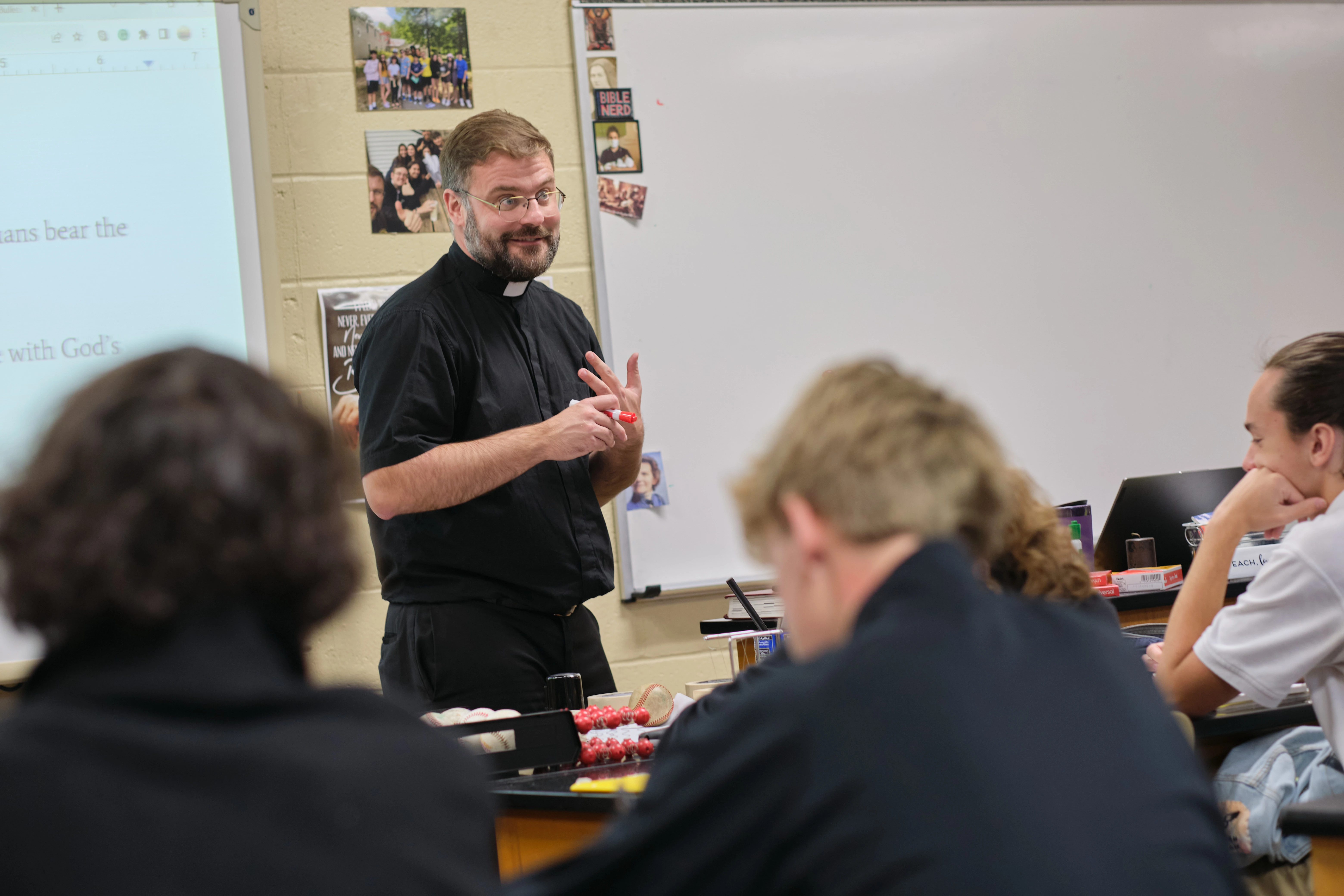
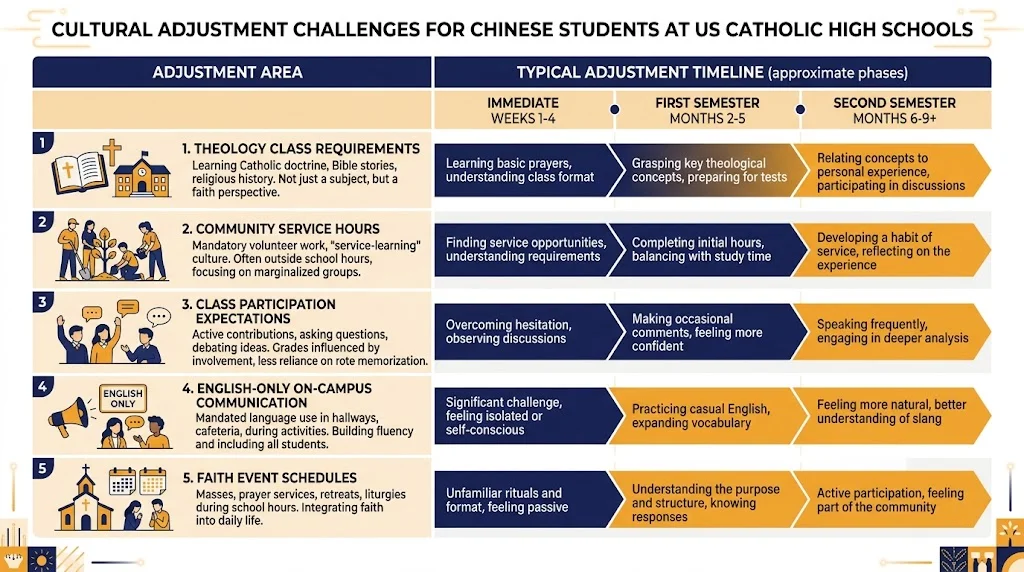
Non-Catholic students, including Chinese students who may practice Buddhism, hold no religious affiliation, or come from families with secular values, are welcomed at US Catholic high schools. The religious requirements are curricular and communal rather than confessional. All students are required to take theology or religion classes as part of the standard curriculum. These classes typically cover Catholic social teaching, ethics, scripture, and world religions, and are approached academically rather than as religious instruction aimed at conversion.
Most Catholic high schools also include school masses, morning prayer, and liturgical events in the school calendar. Participation norms vary by school. Some schools require attendance at school masses; others make attendance strongly encouraged but not mandatory. Chinese students should review the specific religious event requirements with the Amerigo on-campus international department at their assigned school before enrollment to understand what is expected and what is optional. Non-Catholic students are typically welcomed at all faith events and treated with respect regardless of their personal beliefs.
How Does Amerigo Help Chinese Students Settle In?
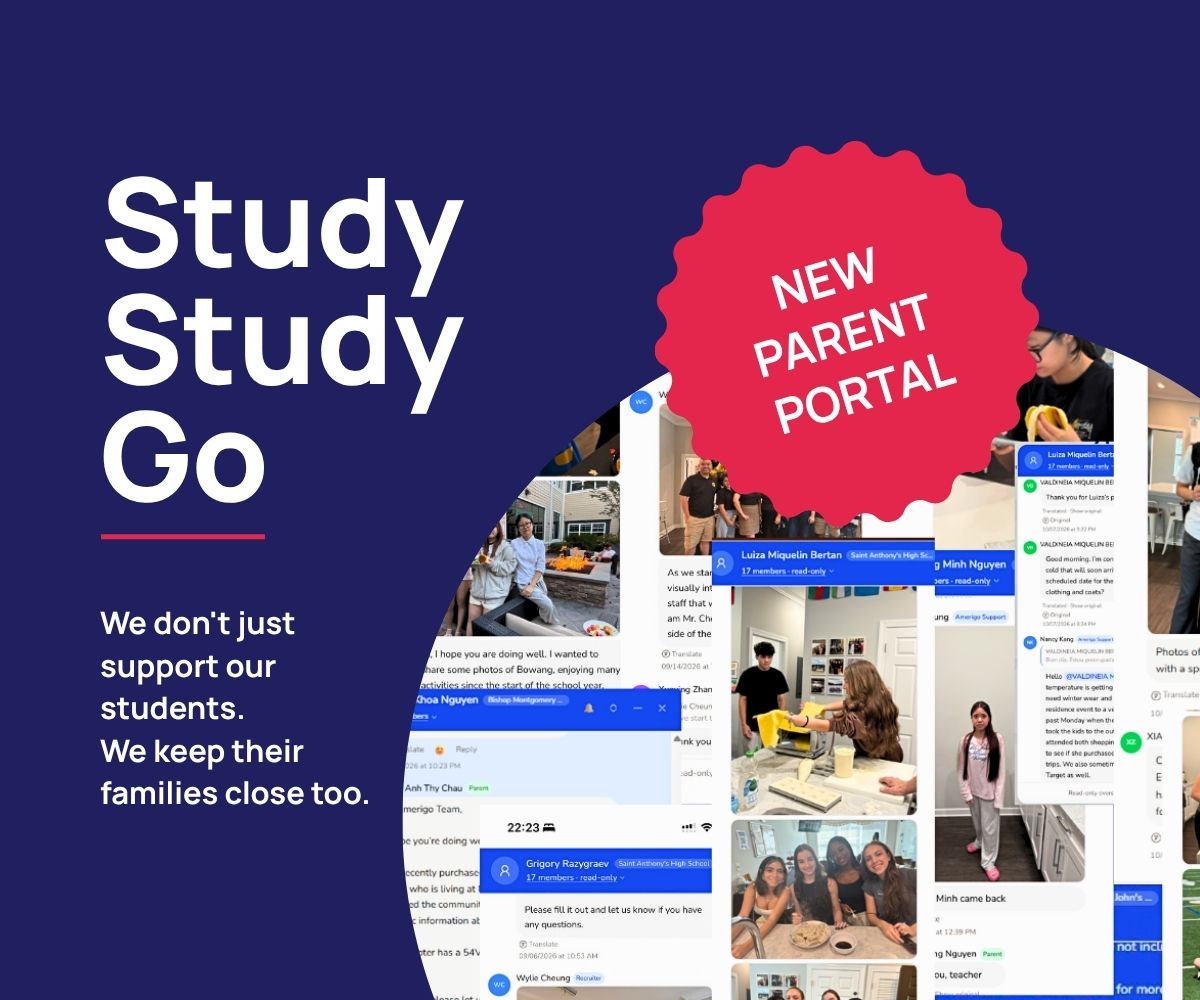
The on-campus international department at each Amerigo US Signature campus provides day-to-day academic and welfare support for Chinese students navigating the Catholic school environment. Campus coordinators are available during study hours to assist with homework, assignment planning, and academic communication with teachers. Monthly progress reports, school activity calendars and event announcements are shared with parents via StudyStudyGo (Amerigo's internally managed parent communication platform, launching Fall 2026).
Amerigo's in-country staff communicate with Chinese families in Mandarin before and after key events such as parent-teacher conferences, orientation, and semester milestones. On-campus communication at Signature Schools is in English. Families also receive Amerigo's pre-departure orientation, which includes culture-specific preparation for the Catholic school environment, and an individualized 1:1 call with the academic director covering course planning and transition expectations. Chinese students at Amerigo Signature campuses also benefit from Amerigo's own social events, which the program hosts for students and their friends separate from school-organized activities, providing an additional community connection point outside the Catholic school calendar.
How Do Catholic Schools Handle Community Service?
Community service is a central feature of the Catholic high school experience in the US. Most Catholic schools require students to complete a minimum number of community service hours as a graduation requirement, typically ranging from 25 to 100 hours depending on the school and grade level. Service activities include food drives, toy drives, packing food for underprivileged families, volunteering at local organizations, and school-organized community projects.
For Chinese students who have not been required to complete formal community service in their home education system, this requirement is one of the more significant cultural adjustments in the first year. The experience also has a direct benefit: according to IIE Open Doors (2025), selective US universities treat community service records as meaningful indicators of character and civic engagement in admissions decisions. Amerigo organizes community service activities for students at Signature campuses, including food drives, prom drives, toy drives, and packing food for underprivileged families. Chinese students can participate in both school-organized and Amerigo-organized service opportunities. Families can read How Community Service Hours Strengthen College Applications for a detailed guide to service documentation and university application framing.
What Social Norms Take the Longest to Adjust To?
Among the social norms that take Chinese students the longest to internalize at US Catholic high schools, classroom participation is consistently the most challenging. Chinese students often enter US schools conditioned to listen attentively without volunteering answers, to avoid standing out from peers, and to show deference to teachers rather than challenge or question in class. US Catholic schools actively reward verbal contribution, intellectual questioning, and confident self-expression, and grades in some subjects include a participation component.
The second major adjustment is the relationship between students and teachers. US teachers at Catholic schools are typically accessible, informal in tone, and open to being questioned or approached after class with follow-up questions. Chinese students who initially interpret this informality as a lack of authority may need time to understand that the style reflects an expectation of student self-advocacy rather than permissiveness. Families can review How International Students Communicate With US Teachers for guidance on effective teacher communication strategies. Additionally, reviewing US Academic Integrity and School Rules: Guide for International Students helps Chinese students understand the specific academic integrity norms that US Catholic schools enforce consistently.
Frequently Asked Questions
Do Chinese Students Have to Convert to Catholicism?
No. Catholic high schools in the US do not require students to convert to or practice Catholicism. Non-Catholic students, including those from Buddhist, secular, or other backgrounds, are welcomed and respected. Students are required to take theology or religion classes and attend school community events, but these are academic and cultural requirements, not conversion requirements. Chinese students are treated with full respect for their own beliefs.
Is Mandarin Support Available at Catholic Partner Schools?
Amerigo's in-country staff communicate with Chinese families in Mandarin before and after key events including parent-teacher conferences, orientation sessions, and semester reports. On-campus communication at US Signature Schools is in English. The on-campus international department can assist Chinese students with academic communication and navigation of school processes in English. Monthly progress reports, school activity calendars and event announcements are shared with families via StudyStudyGo.
How Long Does It Take to Adjust to Catholic School Culture?
Most Chinese students report that the primary academic adjustment, including class participation, assignment formats, and teacher communication, takes one full semester. Community service and social integration typically deepen over the first full year. Students who begin in Grade 9 or 10 have the longest adjustment runway and generally show the strongest outcomes by Grade 11 or 12. Students who enter in Grade 11 or 12 benefit from more concentrated pre-departure preparation through Amerigo's orientation program.
Are There Chinese Students at Catholic Amerigo Partner Schools?
Yes. Approximately 50% of all Amerigo enrolled students come from China, and Chinese students are present across Amerigo's US Signature School network, including its Catholic partner schools. The presence of a Chinese peer community at the school provides some cultural familiarity during the adjustment period. However, Amerigo's program structure encourages international students to integrate with the full school community rather than to self-segregate within same-country peer groups.
What Happens If a Student Feels Overwhelmed by Religious Content?
Students who have concerns about specific religious content or event requirements should raise these with the campus coordinator at the on-campus international department. Campus coordinators can clarify what is required versus what is optional, communicate with school staff where appropriate, and help students navigate the school's expectations respectfully. Most Catholic schools are experienced in supporting non-Catholic international students and have clear protocols for accommodating different religious backgrounds.
Does Community Service Count Toward University Applications?
Yes. Community service hours completed at Catholic high schools can be listed directly on university applications, including the Common App (Common Application). Service hours completed through Amerigo-organized activities can also be documented. Selective US universities view consistent community engagement as evidence of character and civic commitment. Chinese students who approach service requirements as an opportunity rather than an obligation typically build a more compelling application narrative by Grade 12.
How Are Parent-Teacher Conferences Handled for Chinese Families?
Parent-teacher conferences at US Catholic high schools follow the school's standard schedule. Amerigo's in-country staff communicate key findings and updates with Chinese families in Mandarin after conferences and major reporting periods. On-campus conference meetings are conducted in English. Some schools may offer remote participation options, but families should confirm the specific format with the Amerigo campus team, as conference logistics vary by school.
What Extracurriculars Are Available at Catholic Partner Schools?
US Catholic high schools typically offer a wide range of extracurricular activities including sports teams, student government, community service clubs, arts and music programs, and faith-based organizations. Chinese students at Amerigo Signature campuses are encouraged to join school extracurriculars as part of their integration and university application development. Sports eligibility for international students varies by school and state; some students may need to wait one year before varsity tryouts. Consult the campus team for eligibility details.
Conclusion
Chinese international students at US Catholic high schools adjust to a learning environment that emphasizes participation, community service, and religious education alongside strong academic preparation. The on-campus international department at Amerigo Signature campuses, combined with in-country Mandarin-speaking staff support, provides a structured framework for navigating these differences. Most Chinese students find that full cultural adaptation takes one to two academic years, with the deepest social and academic integration occurring in the second year of enrollment.
Find Your Amerigo Signature School
To learn more about studying in America at an Amerigo partner school, contact us to speak with a program advisor, or apply now to take the first step toward enrollment.
People Also Read
- How to Apply to US Boarding School from China
- How to Overcome Culture Shock: A Guide for International High School Students Ages 14-18
- How International Students Make Friends at US High Schools
About the Author
This guide was written by the Amerigo Education content team, drawing on program data from staff operating the on-campus international department at 40 Niche A+/A rated US, Canadian, and UK partner schools. Learn more about Amerigo Education.
Disclaimer: This article provides general information for educational purposes only. Families should conduct independent research, request current program data from providers, and consult with program representatives regarding specific circumstances. Contact us with questions.