All news
May 30, 2026
Study Abroad 101
Vietnamese Tet vs US Winter Break: Travel Planning for International Students
Vietnamese Tet vs US winter break: when breaks overlap, how F-1 students travel home safely, and how Amerigo supports Vietnamese families during school breaks.
_converted.webp)
Last Updated: May 2026
Tet (Tết Nguyên Đán), the Vietnamese Lunar New Year, is the most culturally significant annual holiday in Vietnam and typically falls between late January and mid-February based on the lunar calendar. According to IIE Open Doors (2025), Vietnam is consistently among the top source countries for international students at US secondary schools, with thousands of Vietnamese students enrolled at US private schools whose families observe Tet as the year's central family celebration.
Amerigo Education partners with 40 Niche A+/A rated schools across the US, Canada, and the UK, supporting 3,500+ students from 55+ countries. The Class of 2025 achieved 97% admission to Top 100 US universities of those who applied. Vietnam is one of Amerigo's primary enrollment markets, and Amerigo's in-country staff communicate with Vietnamese families in Vietnamese before and after key events throughout the academic year including the winter break and spring semester transition period.
This guide covers why Tet and US winter break rarely align, what F-1 travel rules apply during authorized school breaks, what happens to school residences over winter break, and how Vietnamese families can plan travel and family connection strategies around the US academic calendar.
Key Takeaways
- Tet falls after winter break in most years: US school winter break typically ends in early January; Tet falls in late January to mid-February, meaning students usually return to school before Tet begins.
- F-1 students can travel during authorized breaks: International students on F-1 (student visa for academic programs in the US) may travel internationally during authorized school vacation periods.
- School residences close for winter break: Amerigo-managed residences do not stay open during winter break; families must plan alternative accommodation or travel arrangements in advance.
- Travel during school sessions requires DSO approval: Returning home for Tet while school is in session is not a standard authorized absence and requires prior coordination with the DSO.
- Vietnamese families receive native-language support: Monthly progress reports, school activity calendars and event announcements keep Vietnamese families informed year-round through StudyStudyGo.
When Does Tet Fall in the US School Year?
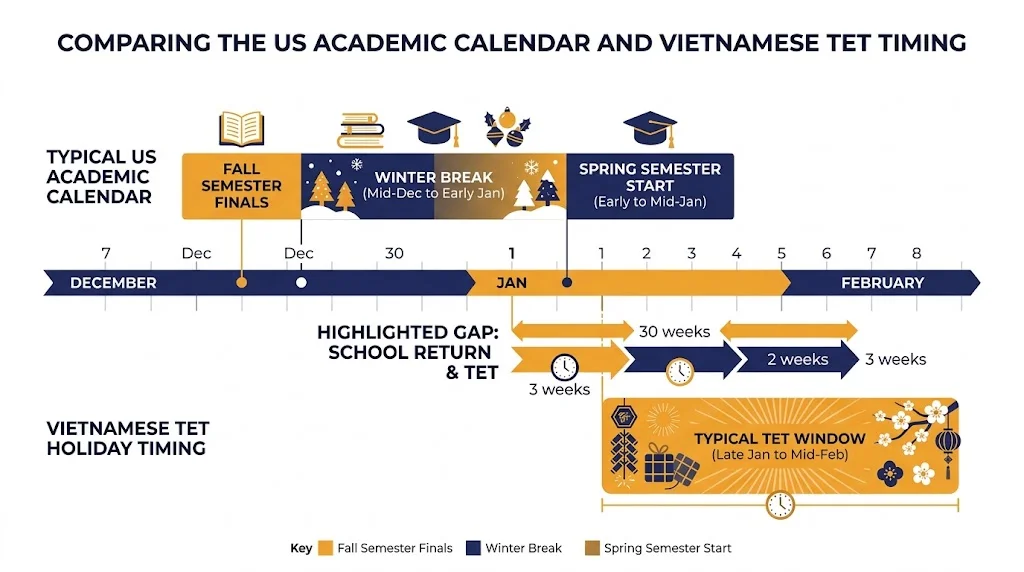
Tet is determined by the Vietnamese lunar calendar and shifts by several weeks each year in the Gregorian calendar, generally landing between late January and mid-February. The US private school academic year places the winter break between approximately mid-December and the first week of January, with the spring semester starting in the second week of January at most Amerigo partner schools.
This timing structure means Tet typically falls two to six weeks after students have returned from winter break and spring classes have already begun. In most years, the winter break and Tet do not overlap. Vietnamese families hoping their children can be home for Tet face the choice of using winter break as the designated travel window (even though Tet has not yet arrived) or exploring mid-term travel options during the spring semester.
According to NAIS (2025), international students who maintain uninterrupted attendance during the spring semester show stronger first-year academic outcomes, making mid-term travel during the spring semester a decision that warrants careful planning rather than an automatic annual assumption.
Can F-1 Students Travel Internationally During Breaks?
Yes. F-1 (student visa for academic programs in the US) students may travel internationally during authorized school vacation periods, including winter break and spring break, as long as they maintain their SEVIS (Student and Exchange Visitor Information System) registration status and return to school before classes resume. Per SEVP, students must maintain full-time enrollment during the active school session and must re-enter the US with a valid F-1 visa stamp and current I-20 form.
Families planning winter break travel to Vietnam should confirm three things before booking flights:
- Return date: The student's return ticket must arrive in the US before the first day of spring semester, with adequate time for re-entry, transit, and rest.
- Visa stamp validity: If the F-1 visa stamp in the student's passport has expired, the student must apply for a new F-1 stamp at a US embassy or consulate in Vietnam before returning. An expired stamp does not void the student's SEVIS status, but it does prevent re-entry without renewal.
- DSO notification: The student's DSO (Designated School Official) at the partner school should be informed of international travel plans in advance, particularly for winter break departures.
Does Winter Break Align With Tet for Vietnamese Families?
In most years, it does not. Winter break typically ends in early January, while Tet falls in late January to mid-February depending on the lunar calendar. This creates a two-to-six week gap during which Vietnamese students are back in class while families in Vietnam are celebrating the new year.
Families have three common approaches to this timing challenge:
- Winter break as the visit window: Students travel to Vietnam during winter break even though Tet has not arrived. This is the most practical option for maintaining full school attendance during the spring semester.
- Virtual Tet celebration: Students remain in the US during Tet, with families celebrating together over video call. Vietnamese students at Amerigo partner schools often gather informally to observe Tet traditions together with other Vietnamese classmates.
- Spring break travel: Some families plan Vietnam travel during spring break (late March or April), which allows families to connect after Tet has passed. Residences remain open during spring break, so students in residences may also stay on campus and join Amerigo-organized trips and activities if they prefer.
What Happens to School Residences Over Winter Break?
Amerigo-managed residences close during winter break and summer break. Students staying in residences must arrange alternative accommodation during these closure periods. Families should review the school academic calendar and confirm residence closure dates well in advance, as dates vary by partner school.
For Vietnamese students, the winter break residence closure often aligns naturally with a trip home to Vietnam, as the break provides an authorized travel window. Students in homestay arrangements should confirm with their host family and the Amerigo campus team whether the homestay continues through winter break or whether the student needs alternative arrangements. At most Signature schools, Amerigo sources homestay families directly, though at select schools a third-party vendor may be involved.
According to NACAC (2024), students who plan school break logistics in advance are significantly less likely to experience disruption at the start of the spring semester. Families should discuss student accommodations and break logistics with the campus team before the first winter break of enrollment.
How Should Vietnamese Students Plan Tet Travel?
For Vietnamese students who want to visit family during the winter break, a structured travel checklist helps avoid F-1 status complications:
- Confirm winter break dates: Check the school's official academic calendar for the first day of spring semester; this is the hard return deadline.
- Verify visa stamp validity: Check the F-1 visa stamp expiration in the student's passport. If it expires before re-entry, apply for renewal at the US embassy in Vietnam early in the trip.
- Notify the DSO: Inform the DSO at the partner school of the travel plan before departure. The DSO can confirm SEVIS status and provide any required travel documentation.
- Book return travel early: Book a return flight that arrives in the US at least one or two days before the spring semester start date to allow buffer time for any travel delays.
- Coordinate residence accommodation: Confirm whether the residence closes during break and when it reopens, to plan arrival back on campus accurately.
Families can also review How Amerigo Prepares Students Before They Arrive for an overview of the pre-departure planning process, which includes guidance on school break logistics from the outset of enrollment.
How Does Amerigo Support Vietnamese Families During School Breaks?
The on-campus international department at each US Signature School assists Vietnamese students with break planning logistics, including communicating residence closure dates, confirming spring semester start dates, and providing campus team contact information for any urgent needs during the break period.
Amerigo's in-country staff communicate with Vietnamese families in Vietnamese before and after key events, including the transition into and out of winter break. Families receive monthly progress reports, school activity calendars and event announcements through StudyStudyGo, Amerigo's parent communication platform launching Fall 2026, keeping them informed of academic standing and upcoming calendar milestones regardless of break period logistics.
Amerigo also hosts its own social events for students and their friends separate from school-organized activities throughout the year. These events provide Vietnamese students who remain in the US during Tet with a structured social outlet and community during a period that can feel isolating for families observing the holiday from a distance.
Frequently Asked Questions
Can Vietnamese Students Go Home for Tet if It Falls During School?
Tet typically falls after winter break has ended and spring classes have begun. Returning to Vietnam during an active school term is not a standard authorized absence and could affect the student's academic standing and SEVIS enrollment record. Families who want their child home for Tet should discuss this with the DSO and campus team well in advance. In most years, the winter break travel window is the practical alternative, even though Tet has not yet arrived.
What Documents Do Students Need to Re-Enter the US After Travel?
Vietnamese students returning to the US after winter break travel need a valid F-1 visa stamp in their passport, a current I-20 form signed by the DSO, and evidence of continued enrollment at the partner school. If the F-1 visa stamp has expired, the student must apply for a new stamp at a US embassy or consulate in Vietnam before attempting re-entry. Families should verify these documents before purchasing return tickets.
Do Residences Stay Open During Tet if It Falls in the School Term?
Yes. If Tet falls during the active spring semester (which it usually does), school residences remain open as normal. Residence closure only occurs during winter break and summer break. Students in residences can observe Tet informally with Vietnamese classmates while remaining in the US. Amerigo's campus team can facilitate connections with other Vietnamese students for informal Tet gatherings.
How Do Vietnamese Families Celebrate Tet With Students Studying in the US?
Most Vietnamese families use video calls and messaging apps to celebrate Tet together with children studying abroad. Amerigo's in-country staff communicate with families in Vietnamese around the Tet period, and monthly progress reports, school activity calendars and event announcements via StudyStudyGo keep families connected to the school calendar throughout. Some families time care packages with traditional Tet foods to arrive at the school residence or homestay around Tet.
What If a Student Needs to Miss School for Tet Travel?
Families who believe their child must attend Tet celebrations in Vietnam should contact the DSO at the partner school as early as possible, ideally three to four months before Tet. Unauthorized absences during the school term can affect grades, GPA (Grade Point Average), and SEVIS status. Families should consult the campus coordinator at the on-campus international department to understand the school's specific attendance policy and absence authorization process.
How Should Families Confirm the Spring Semester Start Date?
Each Amerigo partner school publishes an academic calendar that includes the spring semester start date. Families should request this calendar from the Amerigo campus team at the start of enrollment. The Amerigo Know Before You Go Guide also provides key dates and break period logistics as part of the pre-departure planning process. Residence reopening dates may differ slightly from the first day of classes, so both dates should be confirmed separately.
Can Students Travel to Vietnam During Spring Break Instead?
Yes. Spring break, typically in late March or April, is an authorized school vacation period during which F-1 students can travel internationally. Unlike winter break, school residences remain open during spring break; students who stay in the US can join Amerigo-organized trips and activities. Vietnamese students who choose spring break as their travel window may find that post-Tet family connection is a meaningful alternative to the winter break visit window.
How Early Should Families Plan Winter Break Travel Arrangements?
Families should begin planning winter break travel logistics by September or October of the enrollment year. Flight prices to Vietnam from the US increase significantly as winter break approaches, and US embassy appointment availability for visa stamp renewals in Vietnam can have lead times of several weeks. Early coordination with the Amerigo campus team and the DSO ensures that travel documentation, residence arrangements, and return logistics are confirmed before the December break begins.
Conclusion
Vietnamese Tet typically falls two to six weeks after US school winter break has ended and spring classes have begun, meaning students who travel home for winter break will return to school before the Tet holiday arrives. F-1 students can travel during authorized school vacations, provided their visa stamp and SEVIS status remain valid, and residences close during winter break requiring advance alternative accommodation planning. Amerigo's in-country Vietnamese-language staff and StudyStudyGo platform keep families connected year-round.
Plan Your Child's School Year Travel
To learn more about studying in America at an Amerigo partner school, contact us to speak with a program advisor, or apply now to take the first step toward enrollment.
People Also Read
- Vietnamese Parent's Guide to US High School
- Vietnamese Families' Guide to US High School: Enrollment, Visa, and What to Expect
- Where Does Your Child Go During School Breaks? Holiday Logistics for International Students
About the Author
This guide was written by the Amerigo Education content team, drawing on program data from staff operating the on-campus international department at 40 Niche A+/A rated US, Canadian, and UK partner schools. Learn more about Amerigo Education.
Disclaimer: This article provides general information for educational purposes only. Families should conduct independent research, request current program data from providers, and consult with program representatives regarding specific circumstances. Contact us with questions.