All news
April 6, 2026
Study Abroad 101
How After-School Tutoring Works for International Students in the US
How after-school tutoring works for international students at US high schools: in-residence support, subject tutoring costs, SAT prep, and Amerigo's structured academic model.
How After-School Tutoring Works for International Students in the US
Last Updated: April 2026
After-school tutoring is structured academic support offered outside regular class hours to help students reinforce subject knowledge, address learning gaps, and build skills at their own pace. For international students studying in the US on an F-1 (student visa for academic programs) visa, these sessions address both subject-specific challenges and language barriers simultaneously. According to IIE Open Doors (2025), over 1.1 million international students were enrolled in US institutions, with high school programs representing a growing segment that increasingly depends on supplemental academic support.
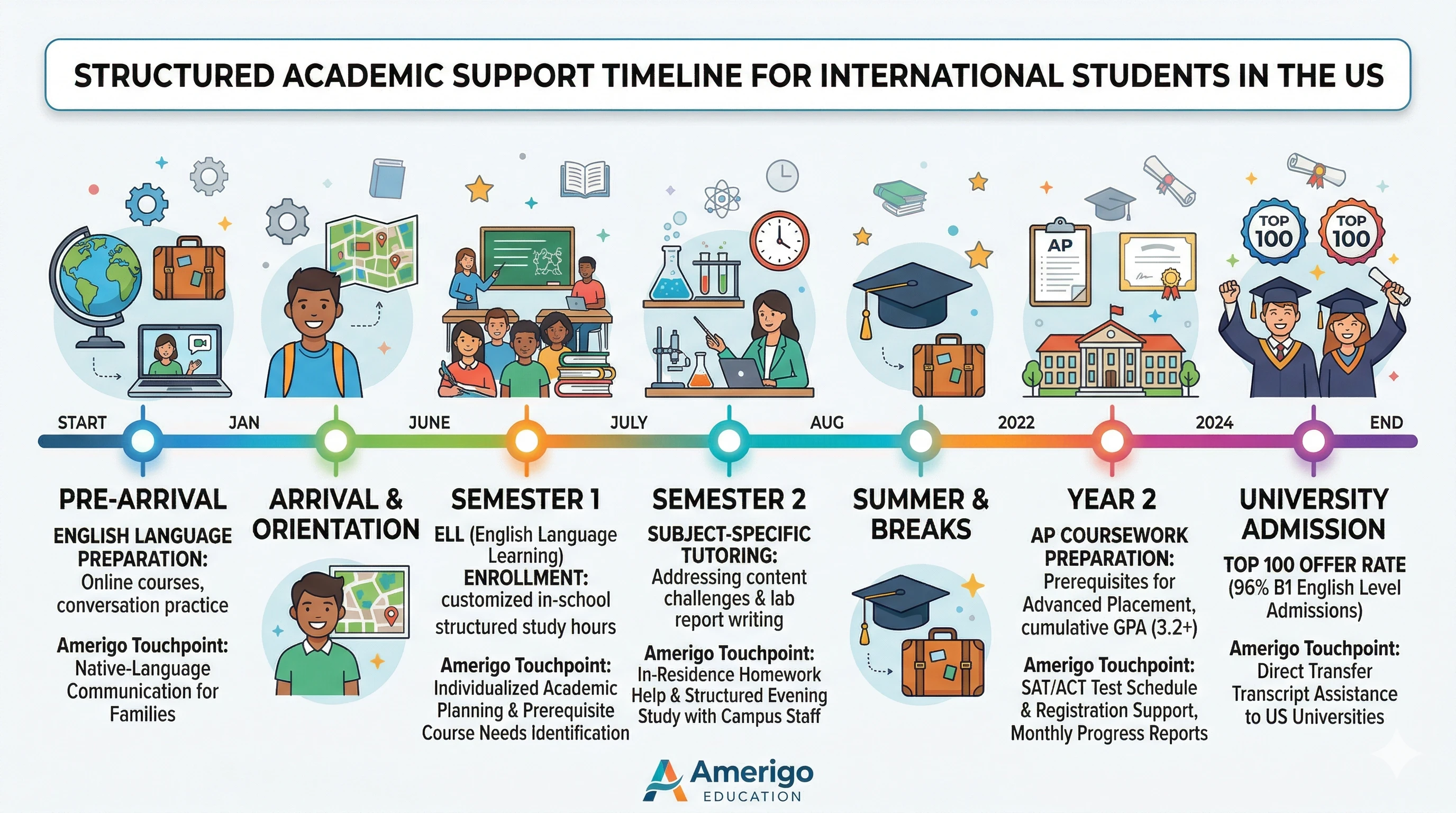
Amerigo Education partners with 40 Niche A+/A rated schools across the US, Canada, and the UK, supporting 3,500+ students from 55+ countries. The Class of 2025 achieved 97% admission to Top 100 US universities. Amerigo's structured academic support model - including subject-specific tutoring, structured study hours, and in-residence homework help - directly addresses the tutoring needs of international students at partner schools.
Key Takeaways
- After-school tutoring for F-1 students: Structured sessions outside class hours address both subject content and ELL development, helping international students close academic gaps faster than self-study alone.
- Amerigo's support model: Students at Amerigo partner schools access in-residence homework help, structured study hours with campus staff, and can schedule meetings with Amerigo academic counselors.
- Subject-specific tutoring: Available at Amerigo schools, though additional costs may apply depending on subject and session frequency.
- Class of 2025 outcomes: 96% of students who arrived at a B1 English level achieved Top 100 US university admission, reflecting the impact of consistent academic support.
- Monthly progress reports: Parents receive monthly progress reports and school activity calendars - not weekly - keeping families informed without overwhelming communication.
What Types of Tutoring Are Available for International Students?
After-school tutoring for international students falls into three main categories: peer tutoring organized by the school, program-provided academic support, and paid external tutoring services. Each model differs in cost, structure, and availability depending on the student's school and living arrangement.
International students at US private high schools typically access tutoring through their school's academic resource center, their international student program provider, or privately arranged sessions. For residential students, the living environment often determines how accessible tutoring is after class hours. Students in structured residential programs benefit from built-in evening support that day students or those in independent arrangements may need to seek out separately.
How Does In-Residence Academic Support Work?
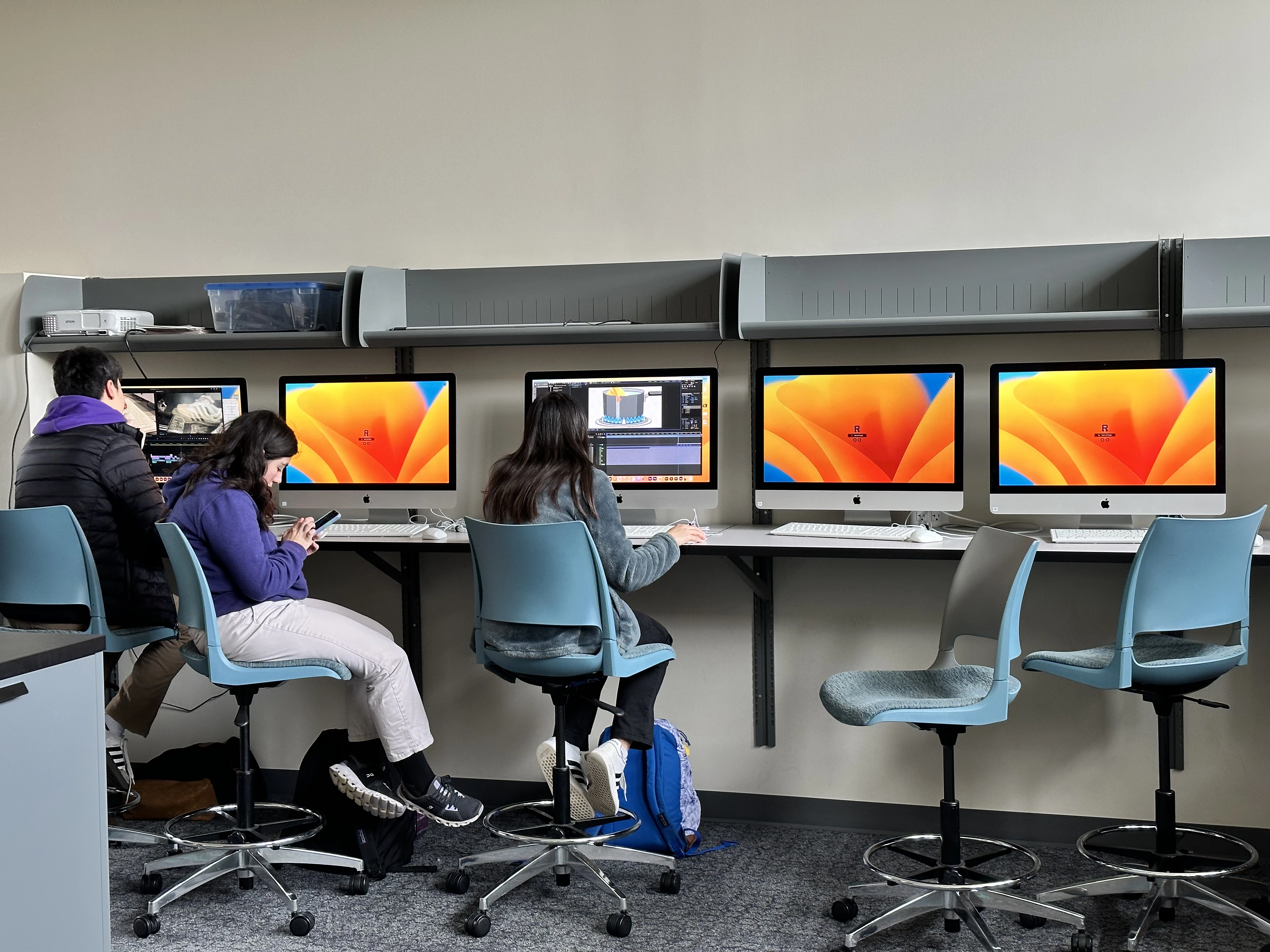
In-residence homework help is structured academic support built into the residential living environment, available to students during evening study hours. Campus staff are present during these structured sessions, providing guidance when students encounter problems with their assignments.
At Amerigo's on- and off-campus residences, dedicated common areas are set up for group study, with teacher availability during structured study hours. This model means students do not have to search for external tutors - support is accessible within the place they already live. Residential students also have the option to schedule meetings with Amerigo academic counselors for more individualized guidance on course planning, including identifying prerequisite courses for AP (Advanced Placement) enrollment. Students in self-provided accommodation (available for those with nearby family in the US) access academic support through the on-campus international department during school hours.
- Evening study hours are scheduled with campus staff present
- Dedicated common areas designed for focused group study
- Teacher availability during structured study periods
- Students can request one-on-one time with academic counselors
- Academic planning includes prerequisite course mapping for AP readiness
- Homestay students access academic support at the on-campus international department office
What Subject Areas Do International Students Most Often Need Help With?
International students studying in the US most frequently seek tutoring support in mathematics, sciences, English composition, and standardized test preparation. The challenge is not always content knowledge - many students arrive with strong math and science foundations from their home countries - but rather the English-language instruction format that changes how problems are presented and assessed.
ELL (English Language Learning) courses offered at Amerigo partner schools are customized in-school programs designed to accelerate English proficiency alongside regular academic coursework. When a student's English level reaches a point where they can access subject content more independently, the need for language-focused tutoring shifts toward subject-specific support. According to NCES (National Center for Education Statistics) data, ELL students who receive structured academic support during their first two years in US schools show significantly faster academic integration than those without structured support.
When Should International Students Start Using Tutoring Services?
International students benefit most from tutoring when they begin it proactively, rather than waiting until grades drop. The first semester in a new educational system is particularly demanding, as students adjust to a different teaching style, assessment format, and language of instruction at the same time.
Amerigo's academic planning model starts students with individualized plans from enrollment, identifying prerequisite course needs before each semester begins. This approach means students are placed in courses matched to their current English and subject proficiency levels, reducing the gap between instruction level and student readiness. When issues arise mid-semester, monthly progress reports allow families to stay informed and for academic counselors to conduct real-time outreach when updates require immediate attention.
How Does SAT and ACT Preparation Factor Into Tutoring?
The SAT (Scholastic Assessment Test) and ACT (American College Testing) are standardized university admissions tests that many US universities require or recommend. For international students, preparation involves both the content of the tests and the format, time constraints, and English reading demands that differ significantly from academic tests in many home countries.
Amerigo supports students with SAT and ACT test schedules, registration support, and transportation to test centers. Students who need more intensive preparation can arrange subject-specific tutoring - though additional costs may apply. Early preparation, typically starting no later than junior year, gives international students enough time to sit the exam multiple times if needed before university applications are due.
- Learn the test format: SAT sections cover reading, writing, and math; ACT adds a science section
- Identify target score ranges for university programs of interest
- Register for the test early - popular test centers fill quickly
- Use school-year tutoring to build test skills alongside regular coursework
- Take a practice test under timed conditions before the official exam
- Review score reports to target specific weak areas in follow-up sessions
How Do Homestay Students Access Academic Support?
Homestay students do not have access to in-residence homework help in the same built-in way as residential students, but they are not without academic support. Amerigo provides homestay placements directly - not through referral - and homestay students access academic support at the on-campus international department office during school hours and after school as available.
The on-campus international department serves as the primary academic support hub for all students, regardless of accommodation type. Homestay students can also schedule meetings with Amerigo academic counselors and participate in evening study groups where available. Monthly progress reports keep homestay families equally informed, with real-time outreach when academic updates require immediate attention.
Frequently Asked Questions
Is after-school tutoring included in Amerigo's program fees?
Subject-specific tutoring may carry additional costs depending on the subject and session structure. In-residence homework help and structured study hours with campus staff are part of the residential living model. Students at all Amerigo partner schools have access to the on-campus international department for academic support. Families should confirm specific tutoring arrangements and any associated costs with Amerigo directly before enrollment.
Can international students work with private tutors outside school?
International students on an F-1 (student visa) are not permitted to work in the US. However, hiring a private tutor as a service - not as employment for the student - is permitted. The practical consideration is scheduling: most students in structured residential programs have organized evening study sessions that make external tutoring less necessary. Students should confirm any off-campus arrangements comply with school policies.
How do ELL courses differ from regular English classes?
ELL (English Language Learning) courses at Amerigo partner schools are customized programs designed to build English proficiency at a pace aligned with the student's current level. Unlike standard English literature or composition classes, ELL courses focus on academic language skills - reading comprehension, vocabulary, writing structure - that transfer across all subjects. They are offered in-school alongside the student's regular schedule.
What happens if a student's grades fall below expectations?
When academic updates require immediate attention, Amerigo academic counselors conduct real-time outreach to families rather than waiting for the monthly progress report cycle. Students can schedule additional meetings with counselors, and their individualized academic plan may be adjusted to add support or modify course load. The goal is to identify and address problems early before they affect university applications.
How do monthly progress reports work?
Monthly progress reports cover academic performance, attendance, and general wellbeing for all students - both residential and homestay. They are sent to parents on a monthly basis, keeping families connected to their student's progress without requiring constant direct communication. When something significant happens between reporting periods, Amerigo conducts real-time outreach. Families can also contact Amerigo Education provides native-language communication support for families from China, Vietnam, Korea, Mexico, the Taiwan Region, and more.
Do all Amerigo partner schools offer the same tutoring resources?
Academic support resources vary across Amerigo's 40 partner schools. All partner schools have Niche A+/A ratings and provide access to in-school academic resources. The on-campus international department operates at Signature private partner schools. Subject-specific tutoring availability and structure differ by school. Students and families should review individual school offerings when selecting a program.
Can students get tutoring help with AP courses?
Yes. AP (Advanced Placement) courses are college-level classes taken during high school, and they require a strong academic foundation. Amerigo's academic planning includes identifying prerequisite courses a student must complete before enrolling in AP classes. Subject-specific tutoring is available to help students meet the demands of AP coursework. All Amerigo partner schools offer 20+ AP courses, giving students a broad selection to choose from based on their university goals.
How does tutoring support university admission outcomes?
The connection between structured academic support and university outcomes is reflected in Amerigo data: 96% of students who entered at a B1 English level achieved Top 100 US university admission (Class of 2025). Consistent support through ELL courses, structured study hours, and subject-specific tutoring builds the academic record - GPA (Grade Point Average), course rigor, and English proficiency - that US universities evaluate. Strong academic performance also supports eligibility for Amerigo's Top 100 Guarantee, which requires a cumulative GPA of 3.2+, TOEFL 85+, at least one AP, IB, or Honors course, and two consecutive years of enrollment.
What role does the international department play in tutoring?
The on-campus international department is the central support hub at Amerigo Signature partner schools. Staff coordinate academic planning, track student progress, serve as the point of contact for families, and connect students with subject-specific tutoring resources. For homestay students, the department also provides the in-person academic support that residential students access through their residence.
Are evening study groups structured or self-directed?
Evening study groups at Amerigo residences are structured - they take place during scheduled study hours with campus staff present. Students use this time for homework, reviewing class material, and working through subject-specific questions with available teacher support. The structure ensures consistency and accountability, which benefits international students who are managing a heavy academic and language adjustment simultaneously.
Conclusion
After-school tutoring for international students in the US spans in-residence homework help, structured study sessions, ELL courses, and subject-specific tutoring at additional cost. The right combination depends on each student's English level, subject challenges, and accommodation type. Consistent, early academic support is the factor most strongly associated with strong university outcomes.
Explore Academic Support at Amerigo Partner Schools
If you are looking for a US high school program that builds structured academic support into the student experience from day one, Amerigo Education offers a comprehensive model across 40 Niche A+/A rated partner schools. Contact us to learn how the on-campus international department and residential academic support work at specific schools, or apply now to begin your school selection.
People Also Read
- International Student Support Services: Complete Guide 2026
- How to Improve English for International Students: Proven Methods
- What is Advanced Placement Credit: Complete Guide 2026
About the Author
This guide was written by the Amerigo Education content team, drawing on program data from staff operating the on-campus international department at 40 Niche A+/A rated US, Canadian, and UK partner schools. Learn more about Amerigo Education.
Disclaimer: This article provides general information for educational purposes only. Families should conduct independent research, request current program data from providers, and consult with program representatives regarding specific circumstances. Contact us with questions.