All news
March 23, 2026
Study Abroad 101
What International Students Eat in the US: Dining and Food Culture Guide
What do international high school students eat in America? Cafeteria food, dietary accommodations, cultural food adjustment, and meal options explained for families.
%20(1).webp)
What International Students Eat in the US: Dining and Food Culture Guide
Last Updated: March 2026
A dining and food culture guide for international students is a resource that explains how meals work at US high schools, what dietary accommodations are available, and how students from other countries adjust to American eating habits. According to the USDA, more than 29.6 million students participate in the National School Lunch Program daily across US public and private schools. For international high school students arriving from countries with different food cultures, meal schedules, and dietary traditions, understanding the US food environment before arrival reduces anxiety and helps families plan ahead.
Amerigo Education partners with 40 schools across the US, Canada, and UK, serving 3,500+ students from 55+ countries. The Class of 2025 achieved a 97% Top 100 university admission rate. Amerigo Education's on-campus international department at each Signature partner school helps students communicate dietary needs, identify local food resources, and adjust to American meal routines during their program.
Key Takeaways
- US school cafeterias offer daily choices: Students select from multiple options including salad bars, hot entrees, sandwiches, and grab-and-go items rather than receiving a fixed plate.
- Dietary accommodations are available: Schools can accommodate halal, kosher, vegetarian, vegan, and allergy-restricted diets when families communicate needs during enrollment.
- Homestay families provide breakfast and dinner: Students eat lunch at school and should communicate food preferences and restrictions to their host family before arrival.
- International grocery stores are accessible: Asian, Latin, Middle Eastern, and specialty markets operate in most US metropolitan areas, and online delivery services reach smaller towns.
- Amerigo staff bridge the communication gap: The on-campus international department communicates dietary requirements to host families, school staff, and residential dining services on behalf of students and parents. At select campuses, Amerigo also provides on-site chefs at student residences to ensure students eat healthy, balanced meals, and chefs occasionally prepare dishes from students' home countries to ease homesickness.
What Do US School Cafeterias Serve?
US high school cafeterias operate on a daily rotation menu, typically offering two to four main entree options alongside a salad bar, fruit, vegetables, and beverages. Under USDA National School Lunch Program guidelines, school meals must include servings of fruit, vegetables, grains, protein, and milk. Students walk through a serving line, select the items they want, and pay at a register or use a prepaid meal account linked to a student ID number.
Common cafeteria foods include pizza, hamburgers, chicken sandwiches, pasta dishes, tacos, rice bowls, and daily specials. Most cafeterias also offer a salad bar with lettuce, tomatoes, cucumbers, dressing, and toppings. Grab-and-go options like wraps, yogurt parfaits, granola bars, and pre-made sandwiches are available at many schools for students who prefer a quicker meal. Beverages typically include water, milk, and juice.
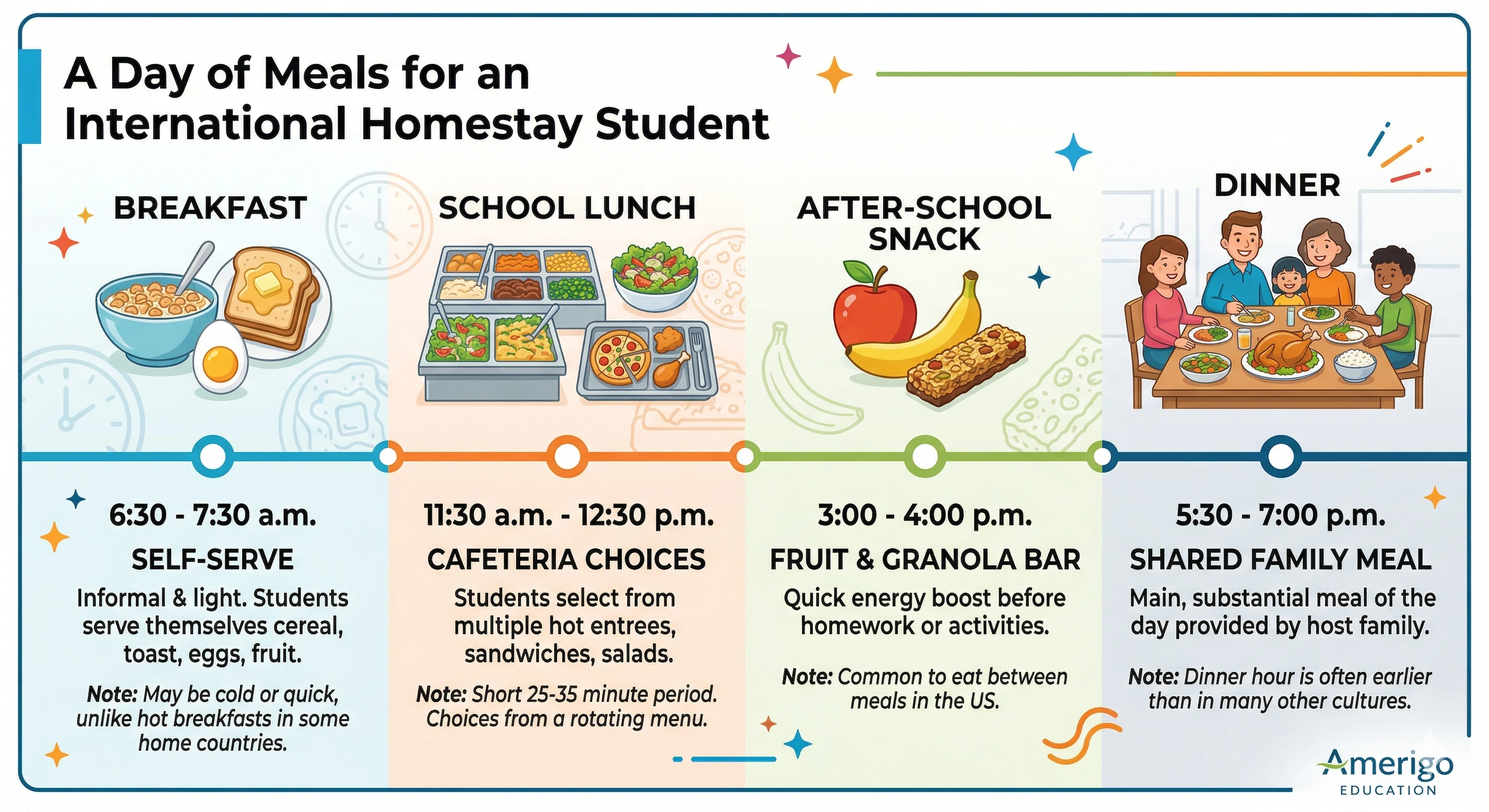
International students should know that US school lunch periods are typically 25 to 35 minutes long. This is shorter than lunch breaks in many Asian and European countries. Students who are unfamiliar with cafeteria food can bring lunch from home as an alternative.
How Are Dietary Needs Accommodated?
US high schools can accommodate a range of dietary requirements including vegetarian, vegan, halal, kosher, and allergy-restricted diets. The key step is communicating these needs during the enrollment process, before the student arrives on campus. Schools need advance notice to confirm what their cafeteria can provide and to flag the student's needs with kitchen staff, the school nurse, and relevant teachers.
For students with food allergies, families should submit a physician-signed allergy action plan to the school. This document specifies the allergens, symptoms of a reaction, and emergency treatment steps. Common allergens tracked by US schools include peanuts, tree nuts, milk, eggs, wheat, soy, fish, and shellfish. The school nurse keeps this documentation on file and coordinates with cafeteria staff to prevent exposure.
- Vegetarian and vegan: Salad bars, pasta without meat, bean dishes, and fruit are typically available daily. Confirm options with the cafeteria manager.
- Halal: Some schools offer halal-certified meat options. Others provide vegetarian alternatives that meet halal requirements. Ask during enrollment.
- Kosher: Kosher meal availability varies significantly by region. Schools in areas with larger Jewish populations are more likely to offer kosher options.
- Gluten-free: Many cafeterias label gluten-free items. Students with celiac disease should provide medical documentation and meet with the cafeteria manager.
- Nut-free: Peanut and tree nut allergies are among the most commonly tracked allergens in US schools. Many schools maintain nut-free zones in the cafeteria.
Amerigo Education staff communicate dietary requirements to school cafeteria managers and host families on behalf of students and parents. Native-language support is available for families from China, Vietnam, Korea, Mexico, the Taiwan Region, and more.
What Meals Come with Homestay Living?
Students in homestay accommodation typically receive breakfast and dinner from their host family on school days, plus all meals on weekends and holidays. Lunch is eaten at school. The specific meal arrangements are discussed between the host family and the student before or shortly after arrival.
American breakfast is often lighter and more informal than breakfast in many Asian, Latin American, or Middle Eastern cultures. Common options include cereal with milk, toast, eggs, oatmeal, yogurt, fruit, and juice. Breakfast is frequently self-serve, meaning students help themselves to what is available in the kitchen rather than sitting down to a prepared meal. Dinner is typically the main shared meal of the day, served between 5:30 and 7:00 p.m.
Families should communicate the following to their host family before the student arrives:
- Any food allergies or medical dietary restrictions
- Religious dietary requirements (halal, kosher, or other)
- Foods the student cannot eat or strongly dislikes
- Whether the student is vegetarian or vegan
- Preferred staple foods (rice, bread, noodles)
Host families are generally willing to accommodate dietary needs but may not be familiar with the specific requirements of every culture or religion. Clear, early communication prevents misunderstandings. Amerigo Education's on-campus international department facilitates this communication between families and host households.
How Do Residential Meal Plans Work?
Students living in on- and off-campus supervised residences typically receive a structured meal plan that covers breakfast, lunch, and dinner. Meal plan specifics vary by campus and accommodation type. Some residences include a dining hall where meals are prepared and served at set times. Others provide shared kitchen facilities where students can cook their own meals using ingredients they purchase.
Students in residences with dining halls should review the posted weekly menu and communicate dietary restrictions to dining staff during orientation. While students do not cook independently in residences for safety reasons, Amerigo occasionally hosts supervised cooking sessions where students can bake or cook together as a special group activity, supported by on-campus staff.
Where Do Students Find Food from Home?
International grocery stores are accessible in most US cities and many suburban areas. These stores stock ingredients, sauces, spices, noodles, rice varieties, and packaged foods from specific regions that are not available at standard American supermarkets. Finding a reliable source of familiar ingredients is one of the most effective ways for international students to feel more settled during their first months in the US.
- Asian supermarkets: H Mart (Korean focus, 97 US locations), 99 Ranch Market (Chinese and pan-Asian, 55 locations), and Mitsuwa Marketplace (Japanese focus) carry fresh produce, sauces, noodles, and specialty items from across Asia.
- Latin markets: Stores like El Super, Cardenas Markets, and local tiendas stock tortillas, chiles, beans, fresh produce, meats, and Mexican and Central American pantry staples.
- Middle Eastern and South Asian stores: Patel Brothers (52 US locations) and local halal markets carry spices, lentils, rice, flatbreads, and halal-certified meats.
- Online delivery: Weee! (Asian and Hispanic groceries), Yamibuy (Chinese and Japanese snacks), and Amazon deliver specialty ingredients nationwide, including to smaller towns without local international markets.
Amerigo Education staff at each partner school can help students identify international grocery stores, restaurants, and food delivery options near their campus. For students in smaller towns with fewer options, staff can recommend online ordering services that deliver to the school or residence address.
How Do Students Adjust to American Food?
Cultural food adjustment is one of the most common and least discussed parts of studying abroad as a teenager. Most international high school students experience some degree of food-related homesickness during their first one to three months in the US. This is a normal part of the transition and not a sign that the program is failing or that the student is unhappy overall.
Common adjustment challenges include finding American food less seasoned or differently flavored than home cooking, adapting to larger portion sizes, eating fewer rice-based meals, adjusting to an earlier dinner schedule, and missing the specific dishes their family prepares at home. Students from China, Vietnam, Korea, and the Taiwan Region often note that American school lunches include fewer soups, less rice, and more bread-based items than they are accustomed to eating daily.
Strategies that help students adjust more quickly:
- Learn to cook two to three simple dishes from home: Students who can prepare a familiar meal on weekends report feeling more connected to their food culture.
- Request care packages from family: Dried snacks, instant noodles, sauces, and spice mixes ship internationally and last for months.
- Explore American food with an open mind: Trying regional dishes, seasonal foods, and restaurant cuisines different from cafeteria food gives students a broader experience of American eating.
- Connect with students from similar backgrounds: Cooking together or sharing meals from home builds community and reduces isolation.
- Stock familiar staples: Keeping rice, soy sauce, chili paste, or other essentials in the kitchen (with host family or residence permission) makes everyday eating feel more normal.
How Does American Eating Culture Differ?
American food culture has several characteristics that frequently surprise international students. Understanding these differences before arrival helps students set realistic expectations and reduces the "culture shock" that can come from meal-related surprises during the first weeks of school.
Students should also know that food labeling in the US is regulated by the FDA. Packaged foods display a "Nutrition Facts" panel listing calories, fat, sodium, sugar, protein, and allergens. Reading these labels helps students with dietary restrictions make safe choices at grocery stores and convenience stores.
Frequently Asked Questions
What food do US high school cafeterias serve?
US high school cafeterias typically serve a rotating daily menu that includes pizza, hamburgers, chicken sandwiches, pasta, salad bars, fruit, and hot entrees. Most cafeterias follow USDA National School Lunch Program guidelines, which require offerings of fruits, vegetables, grains, protein, and milk. Students choose from available options each day rather than receiving a fixed plate. Cafeterias at many schools also offer grab-and-go items like wraps, yogurt parfaits, and pre-made salads.
Can US schools accommodate halal or kosher diets?
Many US high schools can accommodate halal, kosher, vegetarian, and vegan dietary requirements when families communicate needs in advance. Accommodation varies by school district and kitchen capacity. Some schools offer designated halal or kosher options daily, while others provide vegetarian alternatives that meet religious dietary standards. Families should submit dietary requirements during enrollment so the school can confirm available options and plan accordingly.
What meals do homestay families provide?
Homestay families in the US typically provide breakfast and dinner on school days and all meals on weekends. Breakfast is often self-serve, with cereal, toast, eggs, fruit, or yogurt available in the kitchen. Dinner is a shared family meal. Students eat lunch at school. Families should communicate dietary needs, allergies, and food preferences to the host family before arrival so the household can plan meals and stock appropriate ingredients.
How do students handle food allergies at school?
International students with food allergies should submit medical documentation to the school nurse and cafeteria manager before the first day of classes. Many schools require a completed allergy action plan signed by a physician. Students can carry a printed allergy card in English listing specific allergens and emergency instructions. The school nurse keeps epinephrine auto-injectors on file for students with severe allergies when families provide a prescription and authorization form.
Where can students buy food from home countries?
Most US metropolitan areas have international grocery stores, including Asian supermarkets like H Mart, 99 Ranch Market, and Patel Brothers for South Asian ingredients. Latin markets stock products from Mexico and Central America. Online retailers including Amazon, Weee!, and Yamibuy deliver specialty ingredients nationwide. Students in smaller towns may rely more on online ordering. Amerigo Education staff can help students identify local international food sources near their campus.
What is the typical US meal schedule?
The standard American meal schedule includes breakfast between 6:30 and 8:00 a.m., lunch between 11:30 a.m. and 1:00 p.m., and dinner between 5:30 and 7:30 p.m. Snacking between meals is common. Many international students find the timing different from home, particularly the early dinner hour and the lighter breakfast format. High school lunch periods typically last 25 to 35 minutes, which is shorter than lunch breaks in many other countries.
Do residential programs include meal plans?
Residential programs for international high school students typically include structured meal plans covering breakfast, lunch, and dinner. Students in on- and off-campus supervised residences may eat in a dining hall or have access to shared kitchen facilities for cooking. Meal plan details vary by campus and accommodation type. Amerigo Education's student services team communicates meal plan specifics, dining schedules, and any available cooking options during the enrollment and orientation process.
How do students adjust to American food?
Most international students go through a food adjustment period during their first one to three months in the US. Common reactions include finding American food less seasoned, portions larger than expected, and fewer rice-based meals available at school. Students who learn to cook one or two dishes from home report faster adjustment. Care packages from family, visits to international grocery stores, and connecting with students from similar backgrounds all help ease the transition.
Can students cook in their accommodation?
Cooking access depends on the accommodation type. Homestay students can typically use the host family kitchen with permission, usually for simple meals or snacks outside of provided meal times. Students in on- and off-campus supervised residences have access to shared kitchens or kitchenettes but are not permitted to cook independently for safety reasons. Students in self-provided accommodation arrange their own cooking and meal preparation. Fire safety rules in residential settings may restrict certain cooking appliances like hot plates or open-flame burners.
How does Amerigo help with dietary needs?
Amerigo Education staff at each partner school communicate dietary requirements to host families, school cafeteria managers, and residential dining staff during enrollment. The on-campus international department helps identify local international grocery stores and restaurants near campus. Staff assist with translating allergy information into English documentation for school medical files. Monthly progress reports to families include updates on student wellbeing, and 24/7 emergency assistance is available for urgent health concerns including allergic reactions.
Conclusion
International high school students in the US have access to school cafeteria meals, homestay-provided meals, residential meal plans, and international grocery stores depending on their accommodation type. Dietary accommodations for allergies, religious requirements, and personal preferences are available at most US schools when families communicate needs during enrollment. The food adjustment period is real but temporary, and students who plan ahead, learn basic cooking skills, and connect with familiar food sources settle in more quickly. Amerigo Education's on-campus international department bridges the communication gap between families and schools so that dietary needs are documented, understood, and met from day one.
Plan Your Student's Transition
Amerigo Education provides accommodation options including homestay, on- and off-campus supervised residences, and self-provided accommodation at 40 partner schools across the US, Canada, and UK. Dietary communication, monthly progress reports, native-language family support for families from China, Vietnam, Korea, Mexico, the Taiwan Region, and more, and 24/7 emergency assistance are included at every Signature partner school. Visa services are provided through a third-party partner (ZF Visa) and billed separately. Apply now or contact us to discuss your student's dietary needs and accommodation preferences.
People Also Read
- What Does a Typical Day Look Like at a US High School?
- What Is Homestay Accommodation? Complete Guide for International Students
- First Year in America: Month-by-Month Timeline for International High School Students
About the Author
This guide was written by the Amerigo Education content team, drawing on program data from staff operating the on-campus international department at Amerigo Education's partner schools across the US, Canada, and UK. Learn more about Amerigo Education.
Disclaimer: This article provides general information for educational purposes only. Families should conduct independent research, request current program data, and consult with program representatives regarding specific dietary accommodations and meal arrangements at individual schools. Contact us with questions.