All news
April 8, 2026
Study Abroad 101
US High School Dress Codes: What International Students Learn During Orientation
US high school dress codes explained for international students: uniform rules, packing tips, orientation coverage, and Amerigo's arrival-week support.
US High School Dress Codes: What International Students Learn During Orientation
Last Updated: April 2026
US high school dress codes are school-specific policies that define what students may and may not wear on campus during the school day. These rules vary significantly across the United States: some schools require full uniforms, others enforce structured dress codes with permitted and prohibited item lists, and a small number have minimal restrictions. According to NCES (2022), approximately 20% of US public schools required students to wear uniforms, while the majority enforced dress codes without requiring identical clothing across the student body.
Amerigo Education partners with 40 Niche A+/A rated schools across the US, Canada, and the UK, supporting 3,500+ students from 55+ countries. The Class of 2025 achieved 97% admission to Top 100 US universities. Amerigo partners primarily with private schools, though the network includes 2 public school partners in California, which means most students encounter structured dress codes or full uniform requirements when they arrive on campus.
This guide covers what international students need to know about US high school dress codes - from the difference between uniforms and dress codes to what to pack before departure, what orientation covers during the first week, and how school culture around clothing differs from many students' home countries.
Key Takeaways
- Uniforms vs dress codes: Around 20% of US public schools require uniforms; most private schools at Amerigo partner campuses have structured dress codes or full uniform requirements.
- Orientation coverage: Dress code rules are reviewed during school orientation in the first week of arrival, covering permitted items, banned items, uniform suppliers, and enforcement procedures.
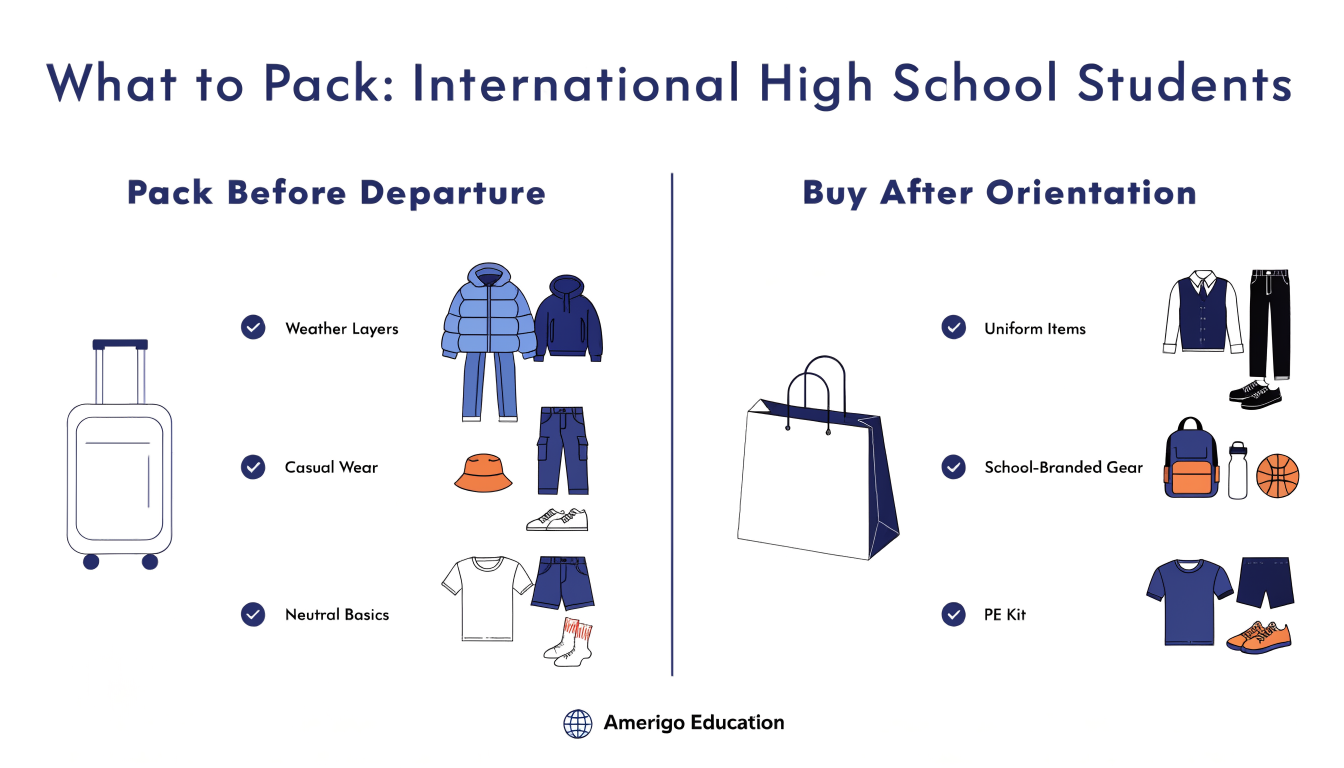
- Packing approach: Pack neutral layered basics before departure and purchase school-specific uniform items after orientation, when exact requirements are confirmed.
- Spirit days: Most US high schools designate Spirit Days when students may wear casual or school-colored clothing in place of the standard dress code.
- Violations: Minor violations typically result in a verbal reminder; repeated violations can be recorded and may affect a student's standing at school.
What Is a US High School Dress Code?
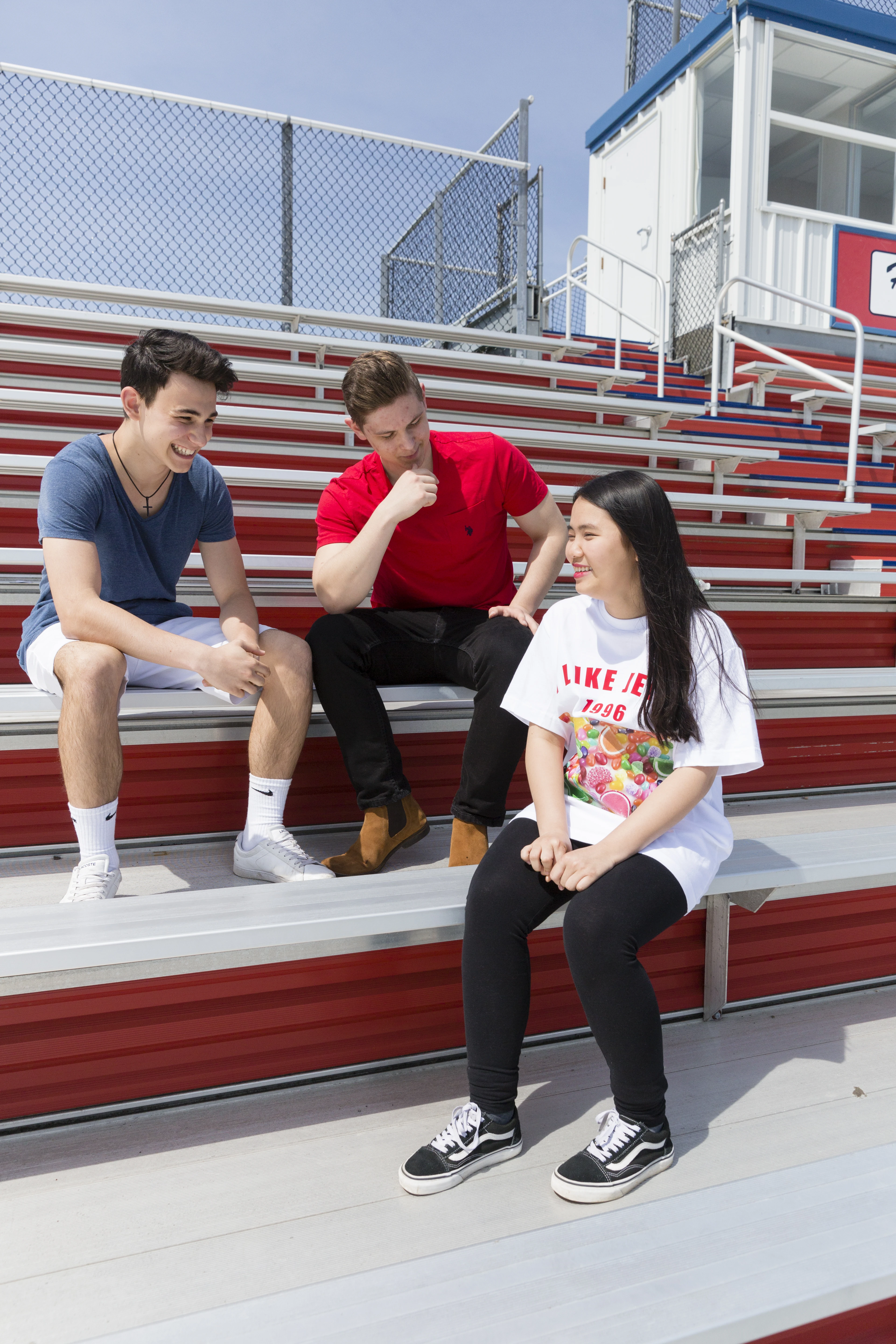
A US high school dress code is a written policy that defines acceptable clothing for students during school hours. Unlike a uniform policy, a dress code does not require all students to wear identical clothing - it sets limits on what is and is not permitted. Common restrictions include prohibitions on revealing clothing, offensive graphics, hats worn indoors, and items associated with gang symbols or colors.
Private schools, which make up the majority of Amerigo partner campuses, often maintain stricter dress standards than public schools. Many require specific polo shirts, dress pants or skirts in approved colors, and closed-toe shoes. According to NAIS (2024), private school dress standards are typically connected to community values and academic culture, and are explained in detail to new students during orientation week.
- Uniform policy: Students wear identical clothing in specific colors and styles purchased from approved suppliers.
- Structured dress code: Students choose their own clothing within defined parameters, such as no jeans, no sleeveless tops, and approved footwear only.
- Relaxed dress code: Minimal restrictions, typically focused on safety and basic standards of appropriateness.
Do All US High Schools Require Uniforms?
Not all US high schools require uniforms. The policy depends on the individual school. Public schools in most states use dress codes rather than uniforms, while most private schools require uniforms or formal dress standards. For students at Amerigo partner schools, the specific dress policy is shared in the school's student handbook, which is provided during orientation or sent to families before arrival.
At Amerigo partner schools, whether a student lives in homestay with a local family or in on- and off-campus residences close to campus, both groups attend the same school and follow the same dress code. All new international students are introduced to the school's dress code during the opening week orientation coordinated by the on-campus international department at each US Signature School.
What Clothes Should I Pack for US School?
International students should pack a versatile base wardrobe of neutral, layered clothing before arrival and purchase school-specific uniform items after orientation. Many Amerigo partner schools specify particular brands, colors, or suppliers for uniform items - purchasing these before arrival risks getting the wrong version. Waiting until orientation ensures students have the correct information from the school directly.
Amerigo's pre-departure process includes a 1:1 call with an academic director covering arrival logistics, including a packing checklist. Families can also review student accommodation options ahead of arrival. Families are guided on weather-appropriate clothing for the school's location, since New England winters, California climates, and Midwest seasons vary considerably across the partner school network.
- Neutral basics: Plain t-shirts, dark trousers, and clean sneakers work across almost all dress codes while uniform items are sourced locally after orientation.
- Weather layers: A waterproof jacket, sweater, and closed-toe shoes cover most US school campuses through the autumn arrival period.
- Weekend and free-time clothing: Casual tops, jeans, and comfortable footwear for evenings at the residence, weekend outings, and social activities.
- Formal clothing: One formal outfit (dress, suit, or smart attire) for school occasions such as proms or awards ceremonies.
What Happens If I Violate the Dress Code?
Dress code violations at US high schools are handled through a graduated process. A first-time minor violation typically results in a verbal reminder from a teacher or administrator. Students may be asked to change, borrow a compliant item from the school office, or contact a parent or guardian. Repeated violations are logged and can appear on a student's school record, which some universities review during undergraduate admissions.
According to APA (2023), consistent behavioral expectations in school settings - including dress standards - contribute to a more focused and equitable academic environment. The on-campus international department at each US Signature School helps students understand the specific enforcement approach at their school during orientation, including who to contact with compliance questions.
- First offense: Verbal reminder; student may be asked to change or cover the non-compliant item.
- Repeated violations: Written record added to the student file; parents or guardians notified by school administration.
- Serious violations: Office referral with potential disciplinary consequences depending on the school's specific policy.
How Does Orientation Cover School Rules?
New student orientation at US high schools typically spans the first day to the first week of school. Students receive their student handbook covering the school's dress code, attendance policy, academic integrity rules, and behavioral expectations. For international students, this is the first structured introduction to the written rules that govern daily school life in the United States.
Amerigo's on-campus international department runs a dedicated orientation session for international students at each US Signature School, covering both school rules and residence expectations. Key dress code topics addressed during this session include:
- Permitted and banned items: A walk-through of the dress code list, including school-approved colors and common violation examples.
- Uniform sourcing: Where and how to purchase required uniform items from approved local suppliers near campus.
- Spirit Day schedule: The calendar of designated days when casual or school-colored clothing replaces the standard dress code for the day.
Families receive monthly progress reports, school activity calendars and event announcements from the first month of enrollment, keeping parents informed of their child's adjustment from day one.
How Does Culture Affect Dress Code Adjustment?
Dress standards at home and at a US high school can differ significantly. In many countries, school uniforms are standard from an early age. In others, casual clothing is the norm and any formal dress code feels unfamiliar. The adjustment is less about the specific rules and more about understanding the culture behind them - US private schools often connect dress standards to academic identity and community belonging.
According to APA (2023), predictable structure - including consistent dress expectations - can reduce anxiety for students in unfamiliar environments. Understanding the purpose behind the rules, rather than viewing them as restrictions, helps students adapt more quickly.
Amerigo hosts its own social events for students and their friends separate from school-organized activities, giving students a relaxed setting outside school hours where casual dress is entirely appropriate. For students navigating the emotional side of dress code adjustment, Amerigo's in-country staff communicate with families in their native language before and after key orientation events to relay concerns and answer questions.
Frequently Asked Questions
Do US high schools require students to wear uniforms?
Not all US high schools require uniforms. Whether a uniform is needed depends on the specific school. Many Amerigo partner schools, which are primarily private institutions, have uniform requirements or structured dress codes. The exact policy is shared with students and families before arrival and reviewed during orientation. Students should wait until orientation to purchase uniform items to ensure they get the correct styles, colors, and approved brands for their specific campus.
What types of clothing are typically banned in US high school dress codes?
US high school dress codes commonly prohibit clothing with offensive graphics or language, items that expose midriff or undergarments, hats or hoods worn indoors, and colors or symbols associated with gangs. Private schools may also restrict ripped jeans, athletic wear during the school day, or non-approved footwear. The full list of prohibited items is published in the school's student handbook, which students receive at orientation or before their first day of class.
What is a spirit day at a US high school?
A spirit day is a designated day - typically a Friday - when students may wear casual clothing or school-colored items instead of their standard uniform or dress code. Spirit days are a common US high school tradition announced in advance through the school calendar. They give students a chance to express school pride and enjoy a more relaxed dress environment while still following a modified set of school guidelines.
Can international students wear traditional clothing from their home country?
Most US high school dress codes focus on prohibitions rather than requiring Western-specific clothing styles. Traditional dress from a student's home country is generally permitted as long as it meets the school's modesty standards and does not include banned item types. Students with questions about specific traditional garments should contact the on-campus international department team at their school, who can clarify the policy and prevent a misunderstanding on the first day of class.
What should students buy before vs after arriving at school?
Students should pack weather-appropriate basics before departure - plain shirts, dark trousers, a waterproof layer, and comfortable shoes - and purchase school-specific uniform items after orientation. Many Amerigo partner schools specify particular brands, colors, or local suppliers for uniform pieces, making it impractical to purchase these items abroad. Amerigo's pre-departure orientation covers this checklist in detail so families arrive with the right preparation.
How strictly are dress code violations enforced at private schools?
Private high schools in the US tend to enforce dress codes consistently because dress standards are tied to the school's academic values and community identity. Students who arrive out of compliance are usually addressed promptly but non-punitively for a first offense. The on-campus international department at each US Signature School can help students navigate the process if a violation occurs, and can communicate with families in their native language if clarification is needed.
Does orientation cover dress codes specifically for international students?
Yes. Amerigo's on-campus international department coordinates a dedicated orientation process for international students at each US Signature School. This session covers the school's dress code alongside attendance policy, academic integrity standards, and how to access support services. The format is designed to give international students a clearer picture of expectations than the general student handbook alone, with structured time to ask questions and confirm understanding before the first full day of classes.
How do dress code requirements vary between Amerigo partner schools?
Dress code requirements vary from school to school within the Amerigo network. Each of the 40 partner schools sets its own policy - some require full uniforms with blazers; others use a structured dress code with approved colors and item types. School-specific information is shared with families before enrollment. The on-campus international department at each US Signature School is the best source for confirming the exact current requirements and recommended suppliers for a specific campus.
How do international students manage the emotional side of dress code adjustment?
Adjusting to a new dress code is one of several cultural changes international students navigate in their first weeks. Amerigo's check-in process through the on-campus international department at each US Signature School gives students a regular opportunity to raise concerns about dress code or school culture. Amerigo's social calendar gives students a space to relax, dress casually, and connect with peers outside the formal school environment.
Conclusion
US high school dress codes vary by school type, with private schools typically applying stricter standards than public schools. International students at Amerigo partner campuses encounter dress code requirements during the first-week orientation run by the on-campus international department. Packing neutral basics before arrival and purchasing uniform items after orientation is the most practical approach for students starting at a new US campus.
Start Your US High School Journey With Amerigo
To learn more about studying in America at an Amerigo partner school - including what orientation covers, how the on-campus team supports new students, and what families should expect in the first month - contact us to speak with a program advisor, or apply now to take the first step toward enrollment.
People Also Read
- First Year in America: Month-by-Month Timeline for International High School Students
- How to Overcome Culture Shock: A Guide for International High School Students Ages 14-18
- Why High School Is the Best Time to Study Abroad: The Science Behind Ages 14-18
About the Author
This guide was written by the Amerigo Education content team, drawing on program data from staff operating the on-campus international department at 40 Niche A+/A rated US, Canadian, and UK partner schools. Learn more about Amerigo Education.
Disclaimer: This article provides general information for educational purposes only. Families should conduct independent research, request current program data from providers, and consult with program representatives regarding specific circumstances. Contact us with questions.