All news
January 24, 2026
Study Abroad 101
Is Homestay the Right Choice for Your Child? A Decision Guide for International Families
Homestay accelerates English fluency through daily family immersion and costs less than residential options. Best for adaptable students who value cultural immersion. Amerigo provides direct homestay services with ongoing oversight.
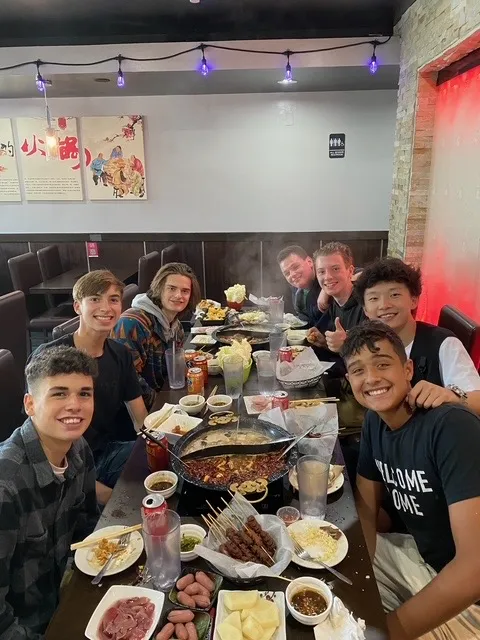
Homestay works best for students who want deep cultural immersion, thrive with family structure, and benefit from daily English practice in authentic settings. Students living with American host families develop language fluency faster than those in international-student-dominated environments, build compelling personal narratives for university applications, and often pay less than residential alternatives. However, homestay requires adaptability, comfort with less structured social environments, and willingness to participate in family life. Amerigo Education provides homestay services directly (not referrals to third parties), with careful student-host matching and ongoing oversight that maximizes benefits while minimizing common challenges.
This guide helps families determine whether homestay matches their child's personality, goals, and needs.
What Homestay Actually Means
Homestay is a housing arrangement where international students live with carefully selected local families while attending school. Students receive:
- Private bedroom with study space
- Shared meals with the family (typically breakfast and dinner)
- Participation in family activities and daily life
- Adult supervision and household structure
- Authentic cultural immersion through daily interactions
Unlike dormitories where students live primarily with other international students, homestay places your child in an American household where English is the daily language and American culture is the constant environment.
The Real Benefits of Homestay
Accelerated English Development
Students in homestay environments practice English constantly through natural family interactions, not just classroom instruction. Conversations at dinner, discussions about daily life, and participation in family activities create immersion that dramatically accelerates fluency compared to environments where students default to their native language with peers.
Cultural Competency That Universities Value
Admissions officers recognize the difference between students who experienced American culture authentically and those who lived in international student bubbles. Homestay students develop:
- Understanding of American social expectations
- Familiarity with customs, holidays, and cultural norms
- Personal narratives about cultural adaptation and growth
- Demonstrated maturity and independence
These experiences strengthen university applications and interviews in ways that residential-only students cannot replicate.
Cost-Effectiveness
Homestay programs typically provide more affordable pricing than residential alternatives while including meals, utilities, and family support. Families avoid:
- Separate housing contracts
- Hidden utility costs
- Additional meal expenses
- Complexity of managing foreign housing arrangements
Family Structure and Supervision
For students ages 14-18, homestay provides adult supervision and household structure that supports healthy routines:
- Regular meal times
- Established household expectations
- Adult guidance on daily decisions
- Supervised environment with accountability
Academic Support Integration
Quality programs ensure homestay students receive the same academic support as residential students. With Amerigo, homestay students receive academic support at the international department's office at school, ensuring professional guidance while benefiting from family-based cultural immersion at home.
Honest Assessment: Is Your Child Right for Homestay?
Homestay isn't ideal for everyone. Consider these factors honestly:
Homestay Works Well For Students Who:
Adapt easily to new environments
- Comfortable with change and unfamiliar situations
- Curious about different ways of doing things
- Flexible when plans or routines shift
Enjoy family interaction
- Value spending time with adults, not just peers
- Comfortable participating in family meals and activities
- Appreciate household structure and routines
Communicate openly
- Willing to express needs, preferences, and concerns
- Ask questions when confused rather than staying silent
- Share their own culture while learning about others
Balance independence with guidance
- Handle personal responsibilities (room, laundry, basic tasks)
- Accept adult guidance without resentment
- Demonstrate maturity appropriate for their age
Prioritize language development
- Motivated to practice English constantly
- See daily immersion as opportunity, not burden
- Willing to push through initial communication challenges
Homestay May Be Challenging For Students Who:
Strongly prefer peer environments
- Want to be surrounded by same-age friends constantly
- Feel uncomfortable in adult-dominated settings
- Need peer social interaction as primary support
Require high privacy levels
- Uncomfortable sharing common spaces
- Need significant alone time to recharge
- Prefer minimal interaction outside school hours
Struggle with adaptability
- Difficulty adjusting to unfamiliar routines
- Strong attachment to specific foods, schedules, or customs
- Resistant to trying new things
Avoid communication challenges
- Shut down when communication is difficult
- Prefer to struggle alone rather than ask for help
- Become frustrated easily with misunderstandings
This doesn't mean these students can't succeed in homestay, but they may require more support during adjustment or might thrive better in residential environments where peer community is immediate.
How Quality Homestay Programs Work
Not all homestay arrangements are equal. Understanding how quality programs operate helps families evaluate options.
Host Family Selection
Quality programs conduct thorough vetting:
- Comprehensive background checks
- Home inspections for safety and appropriate student spaces
- Interviews assessing cultural sensitivity and commitment
- Training on supporting international students
- Verification of financial stability
Student-Host Matching
Matching considers:
- Interests and activity preferences
- Dietary restrictions and requirements
- Personality compatibility indicators
- Lifestyle preferences
- Academic goals and support needs
Ongoing Oversight
Professional programs don't just place students and disappear:
- Regular check-ins with students and families
- Clear protocols for addressing concerns
- Intervention when conflicts arise
- Replacement options if placements don't work
- 24/7 emergency assistance
Academic Integration
The best programs connect homestay with academic support:
- Coordination between host families and school staff
- Academic support available regardless of housing type
- University counseling and test preparation
- Progress monitoring and family communication
Amerigo's Approach to Homestay
Amerigo Education provides homestay as a direct service, not referrals to third-party agencies. This means:
Careful matching: Student-host pairing based on compatibility factors with program oversight of the entire process.
Ongoing safety monitoring: Regular check-ins, clear expectations, and intervention capability when needed.
Academic support integration: Homestay students receive the same professional academic support as residential students through Amerigo's on-campus international department. Support happens at school, ensuring quality regardless of where students live.
Communication systems: Monthly reports to families, real-time outreach for urgent matters, and native-language staff in China, Vietnam, Korea, Mexico, and Taiwan.
Safety technology: Life360 or Reach tracking accessible to parents for peace of mind.
Replacement capability: If a placement isn't working despite intervention efforts, alternative arrangements are available.
Homestay is one of four accommodation options Amerigo provides (alongside off-campus residences, on-campus residences at select schools, and self-provided arrangements), allowing families to choose what fits best.
Homestay Across Borders: US and UK Options
For families seeking geographic flexibility, Amerigo is expanding beyond the US with a partnership with Brentwood School in the UK, launching Fall 2026.
Why this matters for homestay families:
- Same support model and oversight standards extending to UK
- Option to consider UK pathway if circumstances change
- Consistent program quality regardless of country
- Family relationships with Amerigo maintained across either pathway
Families aren't locked into a single country. If US visa concerns, geopolitical factors, or family circumstances shift, students can potentially access quality education with consistent support in either location.
What to Expect: The Homestay Timeline
First Month: Adjustment Phase
Expect:
- Significant cultural adjustment
- Communication challenges and misunderstandings
- Potential homesickness (often more intense due to language barriers)
- Learning household routines and expectations
- Building initial relationship with host family
Normal challenges:
- Feeling exhausted from constant English processing
- Missing familiar foods and routines
- Uncertainty about expectations and boundaries
- Some awkwardness in family interactions
Months 2-3: Stabilization
Expect:
- Growing comfort with household routines
- Improved communication with host family
- Beginning to feel "at home" in the environment
- Natural English use increasing
- Participation in family activities becoming easier
Months 4-6: Integration
Expect:
- Genuine relationship with host family developing
- Household routines feeling natural
- Significant English improvement noticeable
- Cultural understanding deepening
- Feeling like part of the family, not a guest
Beyond 6 Months: Belonging
Expect:
- Host family feeling like extended family
- Cultural competency that feels natural
- English fluency for daily life achieved
- Independence with family support balanced
- Foundation for university transition built
Questions to Ask Homestay Programs
About Host Family Selection
- How do you vet and select host families?
- What background checks are conducted?
- How do you match students with families?
- What training do host families receive?
About Ongoing Support
- How often do coordinators check in with students?
- What happens if a placement isn't working?
- Is there 24/7 emergency support?
- How do you communicate with parents?
About Academic Integration
- Where do homestay students receive academic support?
- Is support equal to residential students?
- How do you coordinate with host families about academic needs?
About Practical Matters
- What's included in homestay costs?
- What meals are provided?
- How do students get to school?
- What happens during school breaks?
Frequently Asked Questions
What does homestay accommodation actually include?
Homestay provides a private bedroom in a host family's home, shared meals (typically breakfast and dinner), participation in family life, and adult supervision. Students share common areas like living rooms and kitchens while maintaining private space for sleeping and studying. Quality programs include host family vetting, ongoing oversight, and coordination with academic support services. The arrangement differs from dormitories by providing family-based cultural immersion rather than peer-dominated environments.
Is homestay more affordable than residential options?
Generally yes. Homestay programs typically provide more affordable pricing than residential alternatives while including meals, utilities, and family support. However, costs vary by location and program. Parents should request detailed breakdowns to understand what's included. Amerigo offers homestay as one of four accommodation options, with transparent pricing that helps families compare and choose based on preferences and budget.
What are the disadvantages of homestay?
Potential challenges include: less privacy than independent housing, need to adapt to family routines and expectations, possible longer commutes to school, reduced peer social time compared to residential settings, and cultural adjustment difficulties. However, quality programs with professional support, clear expectations, and ongoing monitoring minimize these challenges. Students who struggle with adaptability or strongly prefer peer environments may find residential options more comfortable.
How do homestay students receive academic support?
With Amerigo, homestay students receive academic support at the international department's office at school, ensuring the same professional guidance as residential students. This includes tutoring, homework help, university counseling, SAT/ACT preparation, and academic advising. The support happens at school while cultural immersion happens at home, combining the benefits of both environments.
Can students change host families if needed?
Reputable programs provide family change options when compatibility issues arise, though they typically attempt resolution through mediation first. Amerigo maintains the ability to facilitate changes when placements aren't working despite intervention efforts. Parents should understand change policies, timeline requirements, and processes before committing. Quality programs maintain backup options to accommodate necessary changes while minimizing academic disruption.
How long do homestay placements typically last?
Placements range from initial adjustment periods of several weeks to full academic years or multiple years for students completing entire high school programs. Many programs start with shorter initial periods allowing both students and families to adjust before committing to longer arrangements. Students pursuing comprehensive high school programs may maintain homestay throughout their enrollment or transition to residential options based on evolving preferences.
What safety measures protect students in homestay?
Quality programs implement comprehensive safety measures including thorough host family background checks, home inspections, regular coordinator check-ins, 24/7 emergency support, and clear communication protocols with parents. Amerigo provides safety technology (Life360 or Reach) that parents can access for real-time location awareness. Monthly reports keep families informed, with real-time outreach for urgent matters.
How does homestay support university preparation?
Homestay provides daily English immersion that develops genuine fluency, cultural competency that admissions officers value, and personal narratives about adaptation and growth that strengthen applications. Students develop independence skills essential for university success while maintaining supportive structure. The authentic American experience creates advantages over students applying from international schools who lack cultural integration. Amerigo's 97% Top 100 university admission rate (Class of 2025) includes homestay students who benefited from this preparation approach.
What cultural differences should students expect?
Students should expect differences in meal times and food, family communication styles, household responsibilities, privacy norms, technology use expectations, and social customs. American families may have different approaches to study habits, curfews, and participation in family activities. Students benefit from approaching differences with curiosity rather than judgment, asking questions about customs while sharing their own traditions. Open communication prevents misunderstandings from becoming significant problems.
Is homestay available in both US and UK programs?
Amerigo currently offers homestay in US programs. With their UK expansion through Brentwood School launching Fall 2026, families will have options in both countries. The same support standards and oversight model will extend to UK programs, providing consistent quality regardless of location. This flexibility allows families to consider either pathway based on their circumstances and preferences.
Making the Homestay Decision
Homestay offers unique advantages: accelerated English development, authentic cultural immersion, cost-effectiveness, and family structure that supports younger students. These benefits make homestay valuable for students who thrive with family interaction, adapt well to new environments, and prioritize language development.
However, homestay requires honest assessment of your child's personality and preferences. Students who strongly prefer peer environments, need high privacy levels, or struggle with adaptability may find residential options more comfortable.
Amerigo Education, founded in 2016 and backed by Avathon Capital, supports approximately 1,000 students from 11 countries through 40 Niche A+/A rated partner schools across the US and Canada. Their direct homestay services (not third-party referrals) include careful matching, ongoing oversight, and academic support integration through their 360° on-campus model.
Their Class of 2025 achieved 100% university acceptance, with 97% admitted to Top 100 universities, 60% to Top 50, and 25% to Top 30. The Top 100 Guarantee with $50,000 refund policy applies regardless of accommodation type, demonstrating that both homestay and residential students receive support that produces exceptional outcomes.
The right accommodation choice depends on your child. Amerigo offers four options so families can choose what fits best.
Contact Amerigo Education to discuss whether homestay matches your child's needs and explore their accommodation options, or apply now to begin your child's journey.
This article provides general information for educational purposes. Every student's situation differs; discuss specific needs with program advisors. Visa services are provided through third-party partners and billed separately. Program outcomes represent historical performance and do not guarantee individual results.