
All news
March 21, 2026
Study Abroad 101
Which US High School Sports Help University Applications?
Which US high school sports strengthen university applications for international students? How athletic participation builds admissions profiles beyond academics in 2026.
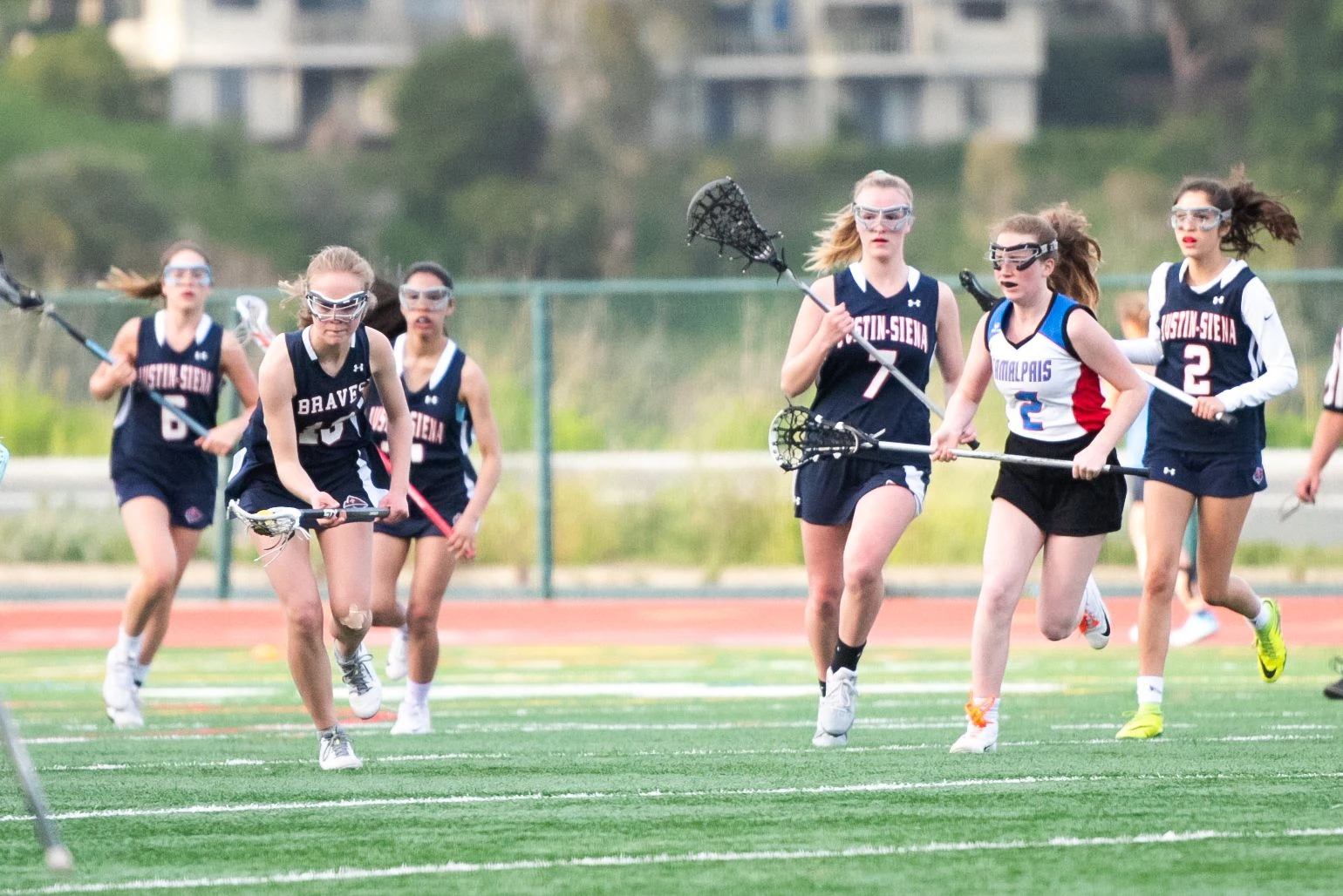
Which US High School Sports Help University Applications?
Last Updated: March 2026
A high school sport, in the context of US university admissions, is an organized athletic activity that demonstrates a student's discipline, time management, and ability to work within a team structure over sustained periods. According to the NCAA, over 8 million students participate in US high school athletics annually, and NCES data shows that students involved in school sports maintain higher GPAs and graduation rates than non-participants. For international students, athletic participation sends a specific signal to admissions officers: this applicant adapted to American school culture, committed to something beyond the classroom, and developed skills that academic transcripts alone cannot measure.
Amerigo Education partners with 40 Niche A+/A rated schools across the US, Canada, and UK, supporting 3,500+ students from 55+ countries. The Class of 2025 achieved 97% admission to Top 100 US universities. Amerigo's on-campus international department helps students identify the right sports, manage tryout timelines, complete required physicals, and balance athletic commitments with coursework and SAT/ACT preparation - building applications that reflect both academic strength and personal character.
Key Takeaways
- Sports signal character: University admissions officers view athletic participation as evidence of discipline, resilience, and teamwork - traits that grades and test scores do not capture on their own.
- Varsity carries the most weight: Among varsity, JV, and club options, varsity participation on a school team demonstrates the highest level of commitment and competitive achievement.
- Some sports transfer globally: Soccer, swimming, tennis, track and field, and cross country are accessible to international students because the rules and skills are consistent worldwide.
- Leadership positions matter most: Serving as team captain or holding a leadership role on a sports team is one of the strongest extracurricular signals available on a university application.
- Participation matters more than recruitment: Most international students will not be recruited athletes, but consistent sports involvement still strengthens admissions profiles significantly.
Why Do Admissions Officers Value Sports?
University admissions officers value athletic participation because it provides documented evidence of qualities that academic records cannot show. A student who practices two to three hours daily, maintains eligibility grades, and competes under pressure demonstrates time management, resilience, and the ability to perform within a structured team. These are the same traits that predict success in a university environment where students balance coursework, social demands, and personal responsibility simultaneously.
The admissions signal from sports is not about athletic talent. Officers are reading for commitment and growth. A student who joined JV soccer in Grade 9, made varsity by Grade 11, and served as captain in Grade 12 tells a four-year story of progression and earned leadership. According to College Board guidance, sustained participation in any activity across multiple years carries more weight than short-term involvement in many activities. Sports provide one of the clearest formats for showing that arc because seasons, rosters, and positions are documented by the school.
- Discipline - daily practice attendance regardless of weather, mood, or academic pressure
- Time management - balancing 15-20 hours of weekly athletics with coursework
- Teamwork - contributing to a group outcome rather than individual achievement
- Resilience - handling losses, injuries, and benchings without quitting
- Coachability - accepting feedback from authority figures and adjusting performance
- Cross-cultural communication - for international students, competing alongside American peers
What Is the Difference Between Varsity, JV, and Club?
Varsity is the highest competitive level of athletics offered by a US high school, representing the school against other institutions in league and tournament play. Junior varsity functions as a developmental team where younger or less experienced athletes build skills before advancing. Club sports operate outside the school system entirely, organized by private organizations that focus on a single sport year-round. Each level carries different weight on a university application.
For admissions purposes, varsity participation carries the most weight because it confirms the student competed at the top level available within their school. JV still counts as meaningful involvement - especially for Grade 9 and 10 students who later advance. Club sports demonstrate dedication to a specific discipline but lack the school affiliation that admissions officers associate with community engagement. International students should aim for varsity when possible, but any level of organized athletic participation strengthens an application compared to no sports involvement at all.
Which Sports Are Accessible to International Students?
Soccer, swimming, tennis, track and field, cross country, basketball, and volleyball are the most accessible sports for international students arriving at US high schools. These sports are played worldwide with consistent rules, meaning students can compete at a high level without learning an unfamiliar game system. A student who played competitive soccer in Vietnam, Korea, or Mexico can try out for a US high school team and contribute immediately because the fundamental skills transfer directly.
Accessibility matters because international students often arrive mid-season or just before tryouts begin, leaving limited time to learn new skills. Sports that rely on universal athletic ability - speed, endurance, coordination - rather than culturally specific knowledge give these students the best chance of making a team quickly. Swimming and track are particularly strong options because performance is measured individually, removing the variable of fitting into an established team dynamic right away. Tennis offers the same advantage for students with prior racket sport experience.
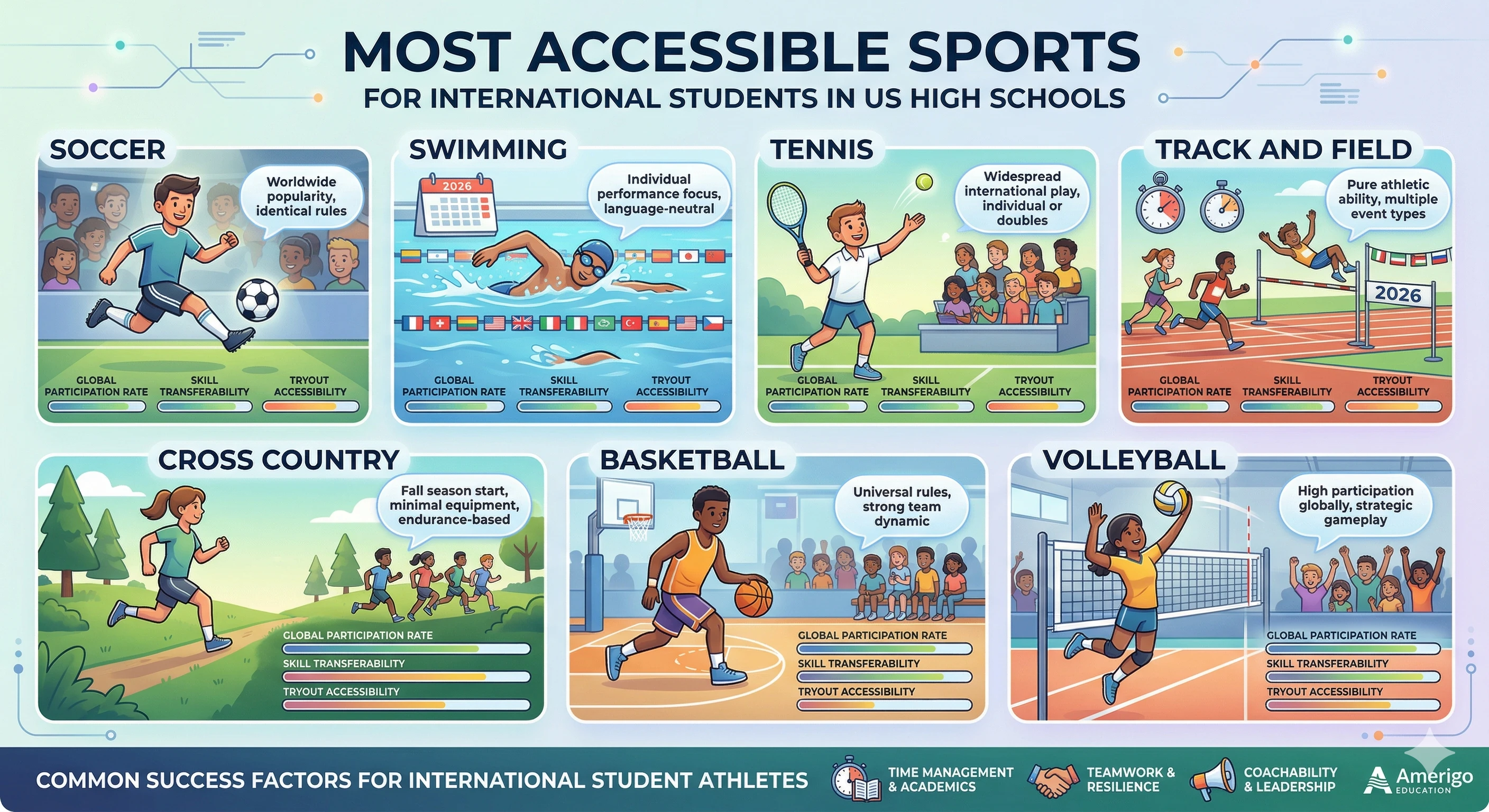
- Soccer - global sport with identical rules, largest international student participation rate
- Swimming - individual performance-based, no language barrier during competition
- Tennis - individual or doubles format, widely played across Asia, Europe, and Latin America
- Track and field - pure athletic ability, multiple event options for different body types
- Cross country - endurance-based, minimal equipment, fall season availability
- Basketball - global popularity growing, fast-paced team sport with universal rules
- Volleyball - widely played internationally, strong participation in Asia and Latin America
Which Sports Are Harder for International Students?
American football, baseball, and lacrosse present the steepest learning curves for international students because these sports are not widely played outside North America. The rules, equipment, positions, and tactical systems are unfamiliar to students who grew up in countries where these sports have limited or no presence. This does not make participation impossible, but the time required to reach competitive readiness is significantly longer.
American football carries additional considerations beyond unfamiliarity. The physical contact level creates injury risk for students who have not trained in tackling and blocking techniques from a young age. Baseball requires specific skills - hitting a pitched ball, fielding ground balls, understanding base-running strategy - that take years to develop. Lacrosse is growing internationally but remains concentrated in the northeastern US and parts of Canada. Students interested in these sports should consider beginning at the JV or freshman level where coaching is focused on skill development rather than winning games.
How Does Athletic Leadership Strengthen Applications?
Serving as team captain is one of the strongest extracurricular signals a student can present on a university application. A captaincy means that coaches and teammates selected this individual to lead - it is an earned position, not a self-appointed title. For international students, reaching captain of a US high school team carries additional weight because it demonstrates cross-cultural leadership: the ability to motivate and communicate with peers from a different cultural and linguistic background.
Leadership within sports extends beyond the captain title. Students who organize team activities, mentor younger players, or represent the team at school events demonstrate initiative that admissions officers recognize. The key is documented impact. A student who captained the soccer team and then volunteered as a youth soccer coach at a local recreation center creates a connected narrative that shows their athletic involvement produced community benefit. University counselors at structured programs help students identify and articulate these leadership stories for their applications, starting from Grade 9 or 10.
- Team captain - highest leadership position, selected by coaches or team vote
- Team manager - organizational leadership for non-playing students
- Mentor to underclassmen - informal leadership recognized in recommendation letters
- Community coaching volunteer - extends sports leadership beyond the school
- Sports event organizer - demonstrates initiative and planning ability
- Peer athletic tutor - helping teammates maintain academic eligibility
How Do US Sports Seasons and Schedules Work?
US high school sports operate on a three-season calendar: fall, winter, and spring. Each season runs approximately three months, and students can participate in a different sport each season. This structure allows multi-sport athletes to build diverse athletic experience across the academic year. Understanding this calendar is critical for international students because tryouts happen at the start of each season, and missing the tryout window means waiting until the next year for that sport.
Practice schedules during a season typically run two to three hours daily after classes, with games and competitions on weekday evenings or weekends. Travel to away games can add additional hours. Students must maintain minimum GPA requirements to remain eligible - most schools require a 2.0 or higher. Amerigo's individualized academic planning helps students balance varsity-level time commitments with coursework, SAT/ACT prep, and university application deadlines. Monthly progress reports shared with families track whether the athletic-academic balance is working.
How Do Sports Fit the Application Narrative?
The strongest university applications tell a cohesive story where activities, essays, and recommendation letters reinforce a single theme. Sports provide a powerful thread for that narrative because athletic experience connects to leadership, community service, and personal growth in ways that admissions officers can follow across multiple application sections. A student who plays varsity soccer, coaches youth players on weekends, and writes a personal essay about cross-cultural teamwork creates a clear, connected identity.
Most international students will follow the participation pathway rather than the athletic recruitment pathway, and understanding this distinction matters when setting expectations. Recruited athletes receive direct outreach from Division I, II, or III university coaches, attend official campus visits, and may receive athletic scholarship offers. This pathway requires exceptional talent and NCAA Eligibility Center clearance, which evaluates foreign transcripts against US academic standards. The participation pathway - listing sports involvement on the Common Application activities section, discussing athletic experiences in essays, and securing coach recommendation letters - is available to every student who plays a sport at any level, and it is how the vast majority of applicants benefit from athletics.
University counseling from Grade 9 or 10 helps students build this narrative intentionally rather than assembling it retroactively during Grade 12. Students from China, Vietnam, Korea, Mexico, the Taiwan Region, and more receive native-language support from Amerigo staff, ensuring that families understand how American university admissions evaluate extracurricular depth. The Top 100 Guarantee - a $50,000 USD refund for students at US Signature Schools who complete 2 consecutive years with a 3.2+ GPA, TOEFL 85+, and AP/IB/Honors coursework - provides a safety net that allows students to invest time in sports and activities without worrying that extracurricular involvement will come at the expense of admissions outcomes. Students live in homestay, on- and off-campus supervised residences, or self-provided accommodation while accessing this support.
- Register with the NCAA Eligibility Center if pursuing Division I or II recruitment
- Complete a sports physical before the first practice of each season
- Attend tryouts at the start of the target season
- Maintain minimum GPA for athletic eligibility throughout the season
- Track personal statistics and achievements for the application activities list
- Request a coach recommendation letter by the fall of Grade 12
- Connect athletic experience to personal essays and application narrative
- Discuss sports involvement with university counselor for strategic positioning
Frequently Asked Questions
Do US universities require sports for admission?
No university requires athletic participation for admission. However, admissions officers view sports as strong evidence of discipline, time management, and teamwork. Students who participate in at least one sport across multiple seasons show commitment that strengthens their application profile. The activity itself matters less than what the student demonstrates through sustained participation and personal growth over time.
Can international students try out for varsity teams?
Yes. International students on F-1 visas are generally eligible to try out for any school athletic team, though eligibility can vary by state and school regulations. In some cases, international students may need to wait at least one year before trying out. Tryouts are otherwise open to all enrolled students regardless of nationality. The student must complete a sports physical examination after arriving in the US and submit required medical forms before the season begins. Prior experience in the sport is helpful but not always mandatory depending on the team and the number of students trying out.
Which sport is easiest for international students to join?
Soccer is the most accessible sport for international students because it is played worldwide with the same rules and scoring system. Swimming, tennis, track and field, and cross country also transfer well because they rely on individual athletic ability rather than knowledge of American-specific game systems. These sports allow students to compete at a strong level immediately without learning unfamiliar rules or terminology.
What is the difference between varsity and JV?
Varsity is the highest competitive level of high school athletics, typically reserved for upperclassmen and the most skilled players. Junior varsity serves as a developmental team for younger or less experienced athletes. Both are school-affiliated and require tryouts. Varsity participation carries more weight on university applications because it demonstrates the student competed at the top level available to them at that school.
Do sports help with scholarship applications?
Athletic scholarships at the Division I and II levels are available but highly competitive, and most international students will not receive them. However, sports participation strengthens applications for academic and merit-based scholarships because it demonstrates character traits admissions committees value. Many universities consider extracurricular involvement when awarding institutional aid, honors program invitations, and need-based financial support packages.
How many hours per week do sports require?
Varsity sports typically require 15 to 20 hours per week, including daily practices of two to three hours plus weekend games and travel to away competitions. Junior varsity schedules are slightly lighter, averaging 12 to 15 hours weekly. Club sports outside of school vary widely depending on the organization. Students must balance this time commitment with coursework, test preparation, and other extracurricular activities.
Can playing sports hurt my grades?
Research from the NCAA shows that student-athletes often maintain equal or higher GPAs compared to non-athletes. Most high schools enforce minimum GPA requirements for athletic eligibility, which motivates students to keep grades up throughout the season. The time management skills developed through balancing practice and schoolwork frequently improve academic performance. Monthly progress reports help families and staff monitor this balance and intervene early if needed.
What is a sports physical and where do I get one?
A sports physical is a medical examination confirming a student is healthy enough to participate in athletics. It includes a review of medical history, heart and lung check, and flexibility and joint assessment. International students must complete this exam after arriving in the US because foreign medical forms are not accepted. The school or program's on-campus international department can direct families to approved local medical providers.
Should my child play one sport or multiple sports?
Admissions officers value both single-sport depth and multi-sport breadth. Playing one sport across all four years shows deep commitment and skill progression. Playing different sports across fall, winter, and spring seasons shows versatility and a willingness to challenge oneself in new environments. The strongest applications show sustained involvement and growth regardless of whether the student focused on one sport or competed across several.
Does team captain help university applications?
Yes. Serving as team captain is one of the strongest extracurricular signals on a university application because it demonstrates that coaches and teammates recognized the student's leadership ability through a selection process. For international students specifically, earning a captaincy shows cross-cultural leadership - the ability to lead peers from different backgrounds. Admissions officers read this as evidence of maturity and communication skills.
Conclusion
Athletic participation at a US high school gives international students a documented record of discipline, teamwork, and leadership that strengthens university applications beyond what grades and test scores convey alone. The sport matters less than the commitment - showing up every season, progressing from JV to varsity, earning a leadership role, and connecting that experience to a coherent application narrative. Students who start early and plan strategically position themselves to present the strongest possible admissions profile.
Start Building Your Athletic and Academic Profile
Families ready to explore how athletic participation fits into their student's university preparation can apply now or contact us to speak with an admissions counselor in your preferred language. Explore US partner schools, view Canadian options, or learn about Brentwood School in the UK.
People Also Read
- How to Choose a US High School for International Students: Complete Selection Guide 2026
- Do International Students Have an Advantage Applying to US Universities from American High Schools?
- What University Admissions Officers Actually See: Why US High School Changes Everything for International Students
About the Author
This guide was written by the Amerigo Education content team, drawing on program data from staff operating the on-campus international department at Amerigo Education's partner schools across the US, Canada, and UK. Learn more about Amerigo Education.
Disclaimer: This article provides general information for educational purposes only. Families should conduct independent research, request current program data from providers, and consult with program representatives regarding specific circumstances. Contact us with questions.